 Ovelia.appAvailable on the App Store
Caffeine and Hormones: Timing, Cortisol, and Cycle Effects
Caffeine is not automatically bad for hormones, but the same dose can land very differently depending on timing, cycle phase, sleep debt, and contraceptive use. The practical move is to stop asking whether caffeine is 'good or bad' and start tracking when it helps, when it spikes stress, and when it quietly wrecks sleep later.
 The coffee is not the whole story. Timing is doing more work than most people realize.
Caffeine gets dragged into hormone conversations in one of two stupid ways:
- it is either portrayed like a harmless personality trait
- or it is treated like a hormonal apocalypse in a mug
Neither version is useful.
Caffeine is a real physiological input. It changes alertness, stress signaling, sleep pressure, and performance. Those effects can feel great. They can also land differently across the menstrual cycle, especially when sleep is already shaky or when oral contraceptives slow caffeine clearance.
That means the better question is not "should women drink coffee?" Calm down. It is:
When does caffeine help, and when does it create more cost than benefit?
Start with timing, not morality
The cleanest thing we know about caffeine is not even hormone-specific: timing matters.
Late caffeine makes sleep worse for a lot of people, and worse sleep makes next-day stress tolerance, cravings, and hormonal resilience worse. That chain matters more than online caffeine purity debates.
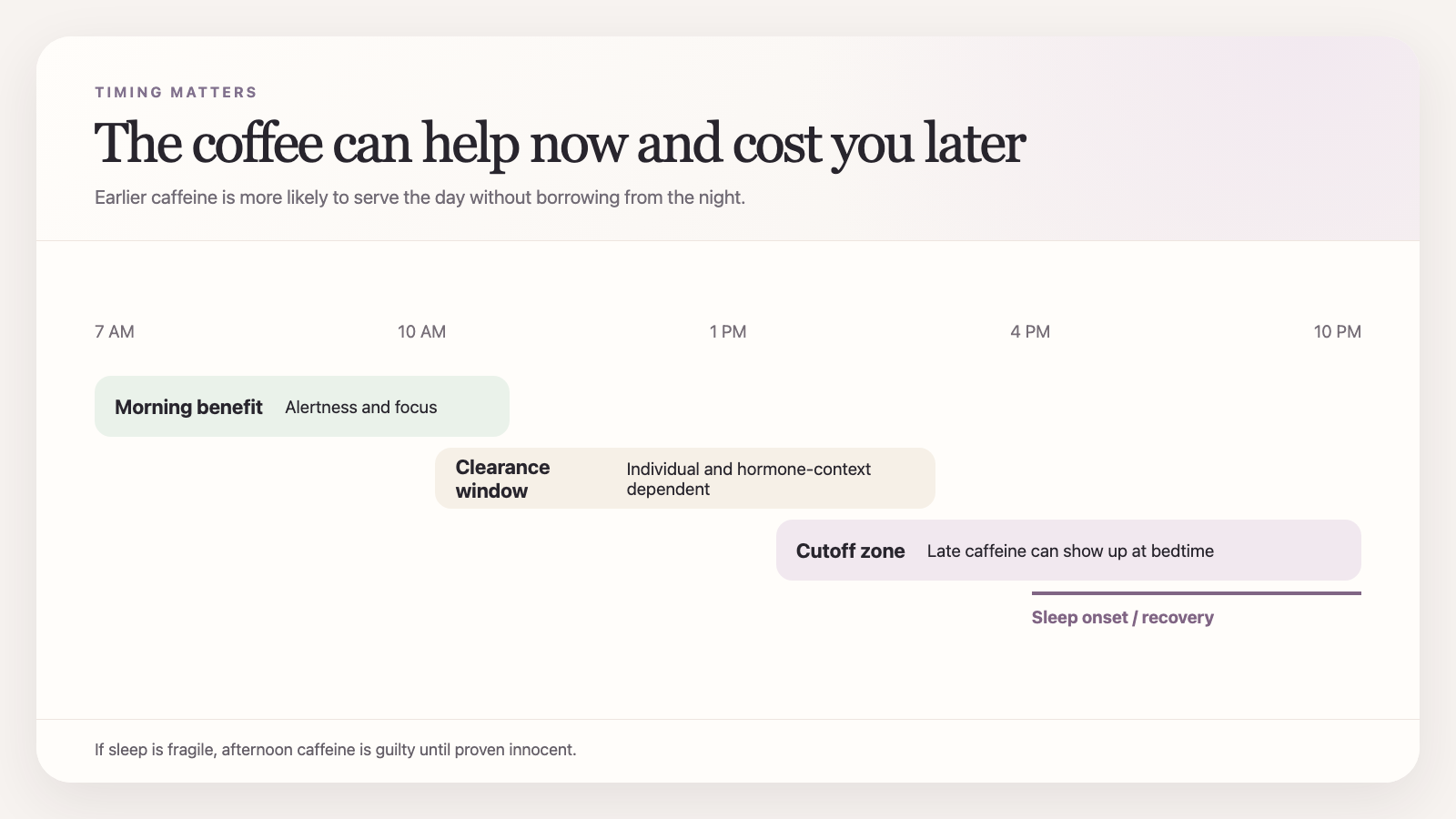 The caffeine that improves the morning can still appear on the bill at bedtime.
If you already have:
- anxious evenings
- poor sleep onset
- stronger luteal fatigue
- stress that runs hot
then a caffeine cutoff is usually a smarter lever than obsessing over whether coffee is "inflammatory."
Cycle phase can change the feel of caffeine
The menstrual cycle is not a precise caffeine destiny machine, but it does change the context in which caffeine lands.
A meta-analysis on cortisol across the menstrual cycle found meaningful phase-related differences in cortisol patterns, and broader physiology reviews show that the luteal phase can come with higher perceived exertion, sleep fragility, and changes in substrate use and thermoregulation.
Translation: if the late-luteal week already feels more expensive, caffeine can either feel like a useful bridge or like borrowed money with ugly interest.
For some women, that means:
- more jitters in the luteal phase
- worse afternoon crash
- poorer sleep when the same coffee timing felt fine two weeks earlier
That does not mean you need a different personality every cycle. It means cycle context can change the margin for error.
Oral contraceptives and caffeine are a real interaction
This one gets missed constantly.
Female sex hormones can slow CYP1A2 activity, the liver enzyme heavily involved in caffeine metabolism. That means women on oral contraceptives often clear caffeine more slowly than women not taking them.
In plain English: the same coffee can stay in the system longer.
That matters if you are wondering why:
- your second coffee suddenly feels like too much
- sleep quality got worse without changing your total intake
- anxiety rose even though your routine "did not change"
Sometimes the routine changed because the biology did.
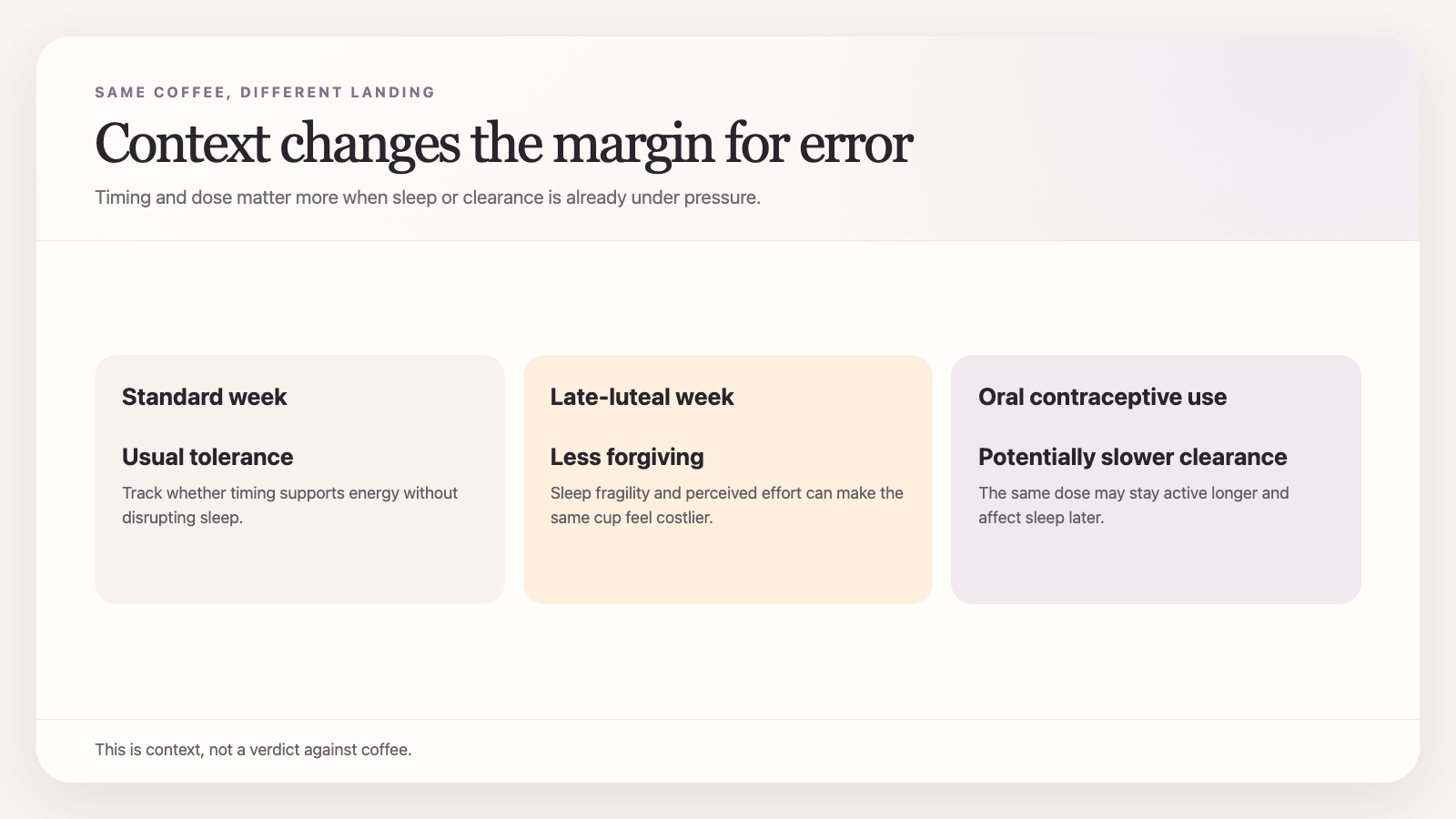 The same dose can carry different costs when sleep fragility or slower clearance changes the context.
Caffeine is not automatically bad for cycle health
This is where nuance is legal and necessary.
The BioCycle Study found that caffeine intake had complex relationships with reproductive hormones and menstrual function, not a cartoonishly simple "coffee ruins your hormones" story. The literature is mixed enough that anyone selling certainty here is mostly selling content.
What is more defensible:
- caffeine can change how stress and sleep feel
- sleep and stress absolutely matter for cycle symptoms
- slower caffeine clearance in some women makes the same intake hit harder
That is enough to guide decisions without pretending the evidence is simpler than it is.
The useful framework: use caffeine like a tool
If caffeine genuinely helps your mornings, concentration, or training, fine. Use it like a tool.
That means:
1. Pull it earlier
Morning or early-day caffeine is usually easier to tolerate than "I need one at 3:30 p.m. to survive being alive."
2. Watch the late-luteal week
If PMS, anxiety, or sleep worsen in the last week before your period, look there first. You may not need less caffeine all month. You may need a different approach in the window where your system is less forgiving.
3. Do not use caffeine to paper over a sleep debt loop
This is the real trap.
Poor sleep -> more caffeine -> poorer sleep -> more caffeine.
People blame hormones for the whole mess when half the problem is a stimulant feedback loop.
4. Be more conservative if you are on oral contraceptives
Not because caffeine becomes evil. Because slower clearance means dose and timing matter more.
Signs caffeine is costing more than it gives
You probably need to change timing, dose, or both if caffeine is consistently associated with:
- anxiety or shakiness
- afternoon crash
- worse luteal symptoms
- poorer sleep onset
- waking at night without another obvious reason
That is not weakness. That is information.
What to track
Track:
- first caffeine time
- total daily dose
- sleep onset
- afternoon energy
- anxiety/jitters
- cycle day
That is enough to expose whether caffeine is helping or quietly stepping on your throat by 10 p.m.
Ovelia is useful here because caffeine is one of those habits people swear they understand until they actually log it against sleep and cycle phase.
The bottom line
Caffeine is not automatically a hormone problem. Bad caffeine timing often is.
If you want the practical version:
- keep it earlier
- pay closer attention in the luteal phase
- remember oral contraceptives can slow clearance
- stop using caffeine to compensate for sleep debt you are also creating
The right coffee habit is the one that improves the day without stealing from the night.
That is a much better standard than "good" or "bad."
Sources:
- Higher Circulating Cortisol in the Follicular vs. Luteal Phase of the Menstrual Cycle: A Meta-Analysis
- Menstrual cycle hormones and oral contraceptives: a multimethod systems physiology-based review of their impact on key aspects of female physiology
- Serum caffeine and paraxanthine concentrations and menstrual cycle function: associations in the BioCycle Study
- Variation of CYP1A2-dependent caffeine metabolism during menstrual cycle in healthy women
Ready to track what actually works for you?
Ovelia turns what you read into a guided protocol you can actually follow.