 Ovelia.appAvailable on the App Store
Journal
Evidence-informed writing on supplements, hormones, sleep, and energy — for women who want clarity, not noise.

July 15, 2026
Sleep Environment: Light, Temperature, and Noise
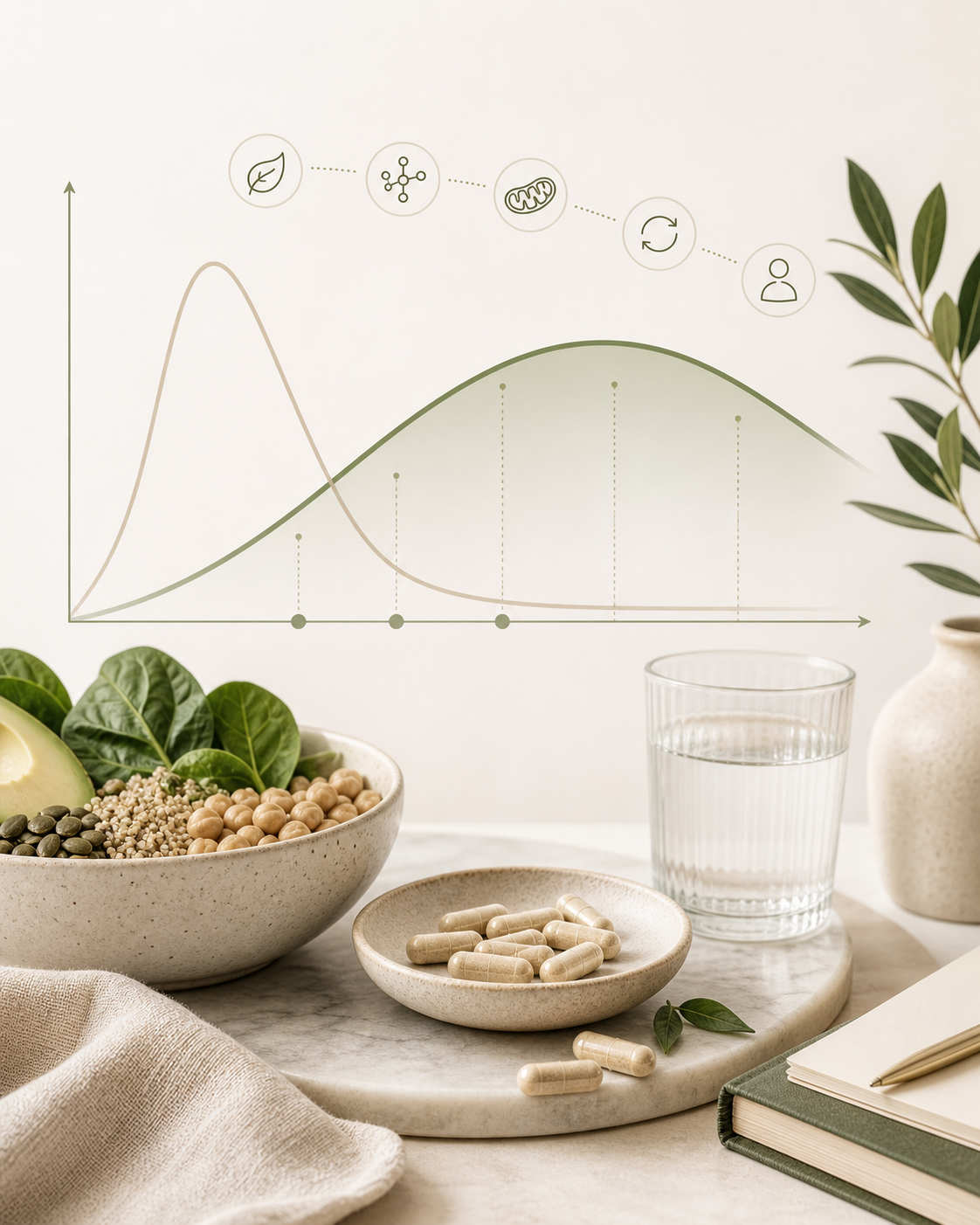
A lot of bad sleep is just bad room math. If the room is too bright, too warm, or too noisy, no bedtime ritual is going to fully cancel that out. Fix the room first, then judge the rest.
July 8, 2026
B Vitamins and Energy: Which Ones Matter, Which Forms Help, and When
B vitamins can matter a lot when deficiency or absorption issues are in play, but they are not instant caffeine. The practical move is to pick the right form, use the right time of day, and track whether energy and clarity actually improve.

July 2, 2026
Gut Health and Bloating: Patterns and What to Try
Bloating is usually a pattern problem, not one universal diagnosis. The useful move is to sort the likely bucket first, then test the smallest useful change instead of buying a probiotic and hoping for the best.

June 28, 2026
Collagen for Skin, Hair, and Joints: What It Can Actually Do
Collagen has a real lane, but not the one marketing usually shoves it into. It is strongest for skin-related outcomes, somewhat plausible for joints and connective tissue, and much weaker as a general protein or muscle supplement.
June 24, 2026
Different Protein Supplements Compared: Whey vs. Casein vs. Plant vs. Collagen
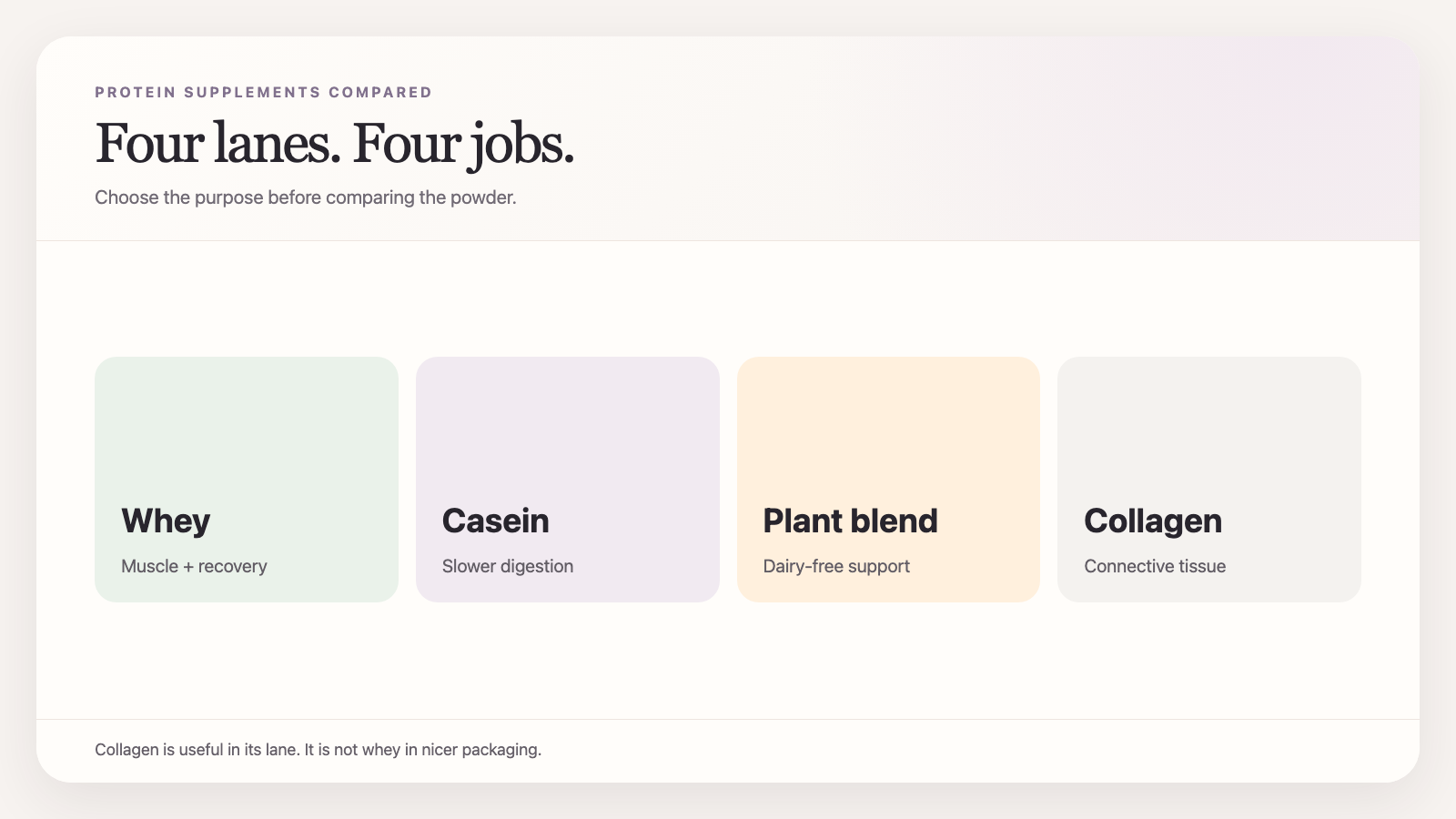
Protein powders are not interchangeable just because they all say '20 grams' on the label. If your goal is muscle and recovery, whey usually wins on convenience and leucine. If you want slower digestion, casein has a case. Plant blends can work well when formulated intelligently. Collagen belongs in a different lane.
June 21, 2026
Probiotics vs. Prebiotics: What the Difference Means for You
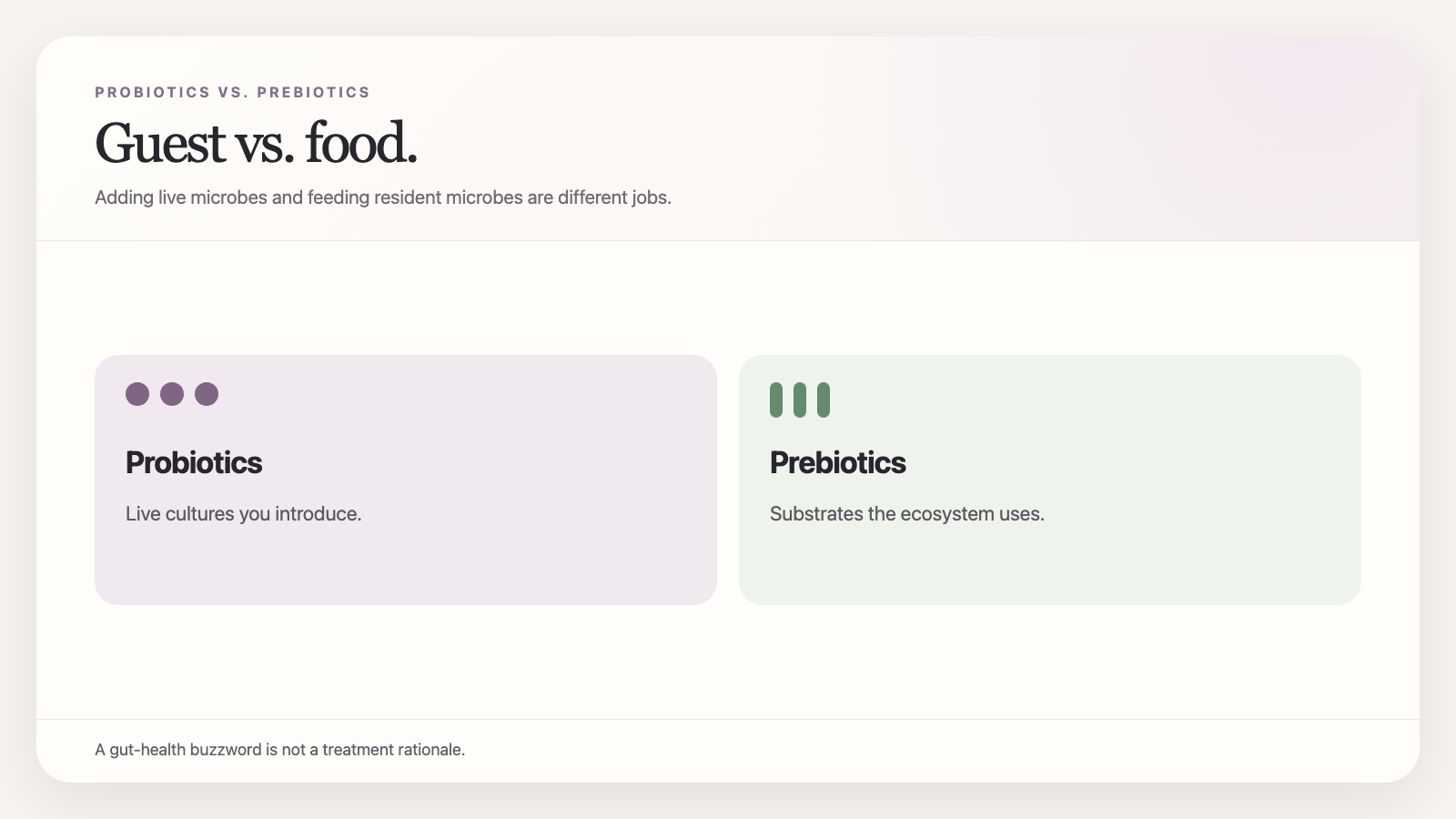
Probiotics and prebiotics are not rival teams, and most people confuse them because both get sold as generic 'gut health' products. The practical move is to stop asking which one is universally better and ask whether you are trying to add a specific strain, feed existing microbes, or simply eat in a way that makes your gut less chaotic.
June 17, 2026
Morning Sunlight and Circadian Rhythm: The Mechanism
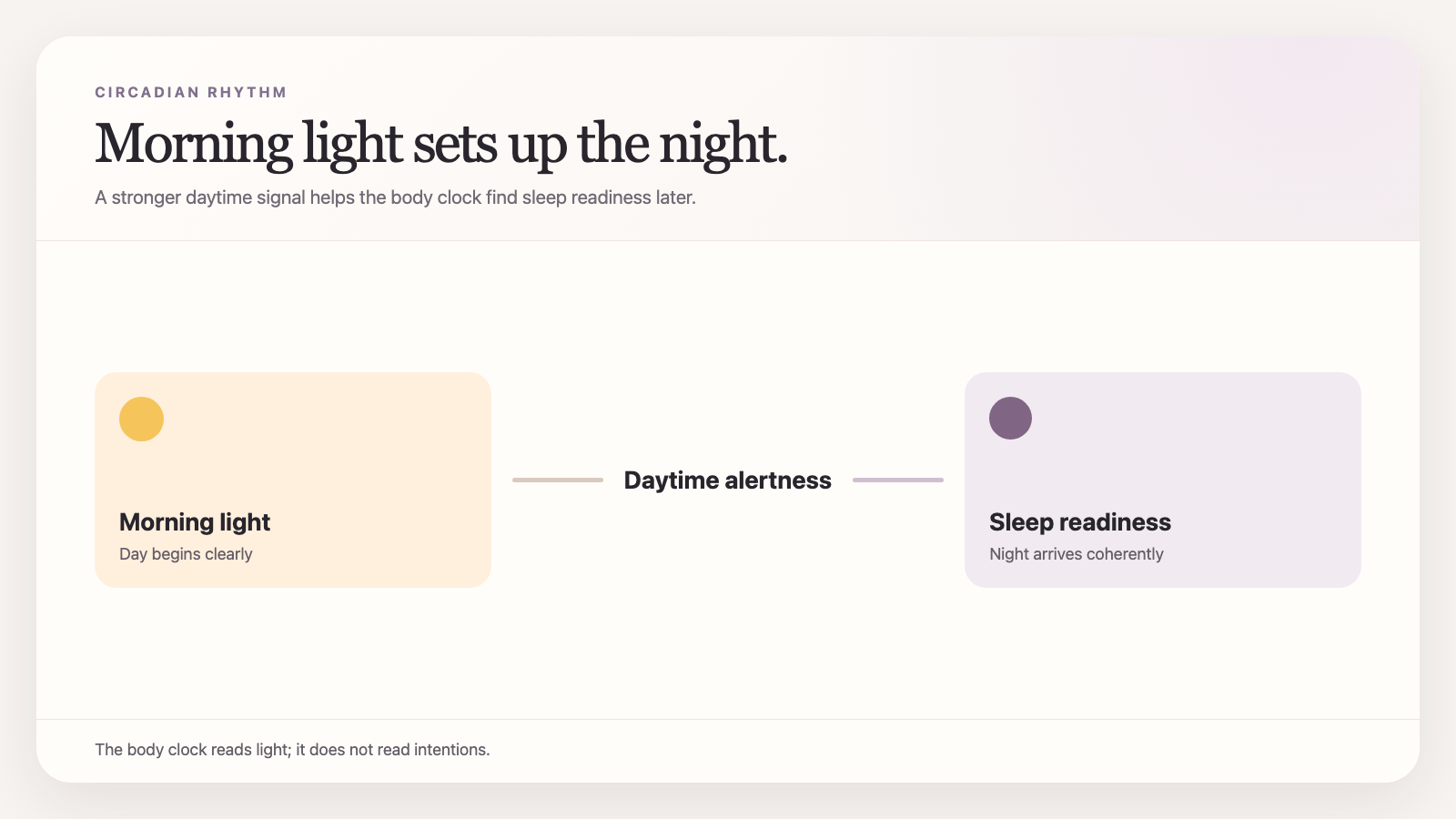
Morning sunlight works because it gives the brain a clear daytime signal, not because it is a magical wellness ritual. If sleep timing feels off, the practical move is to get outside soon after waking and treat light timing like a real biological input instead of a vague healthy habit.
June 14, 2026
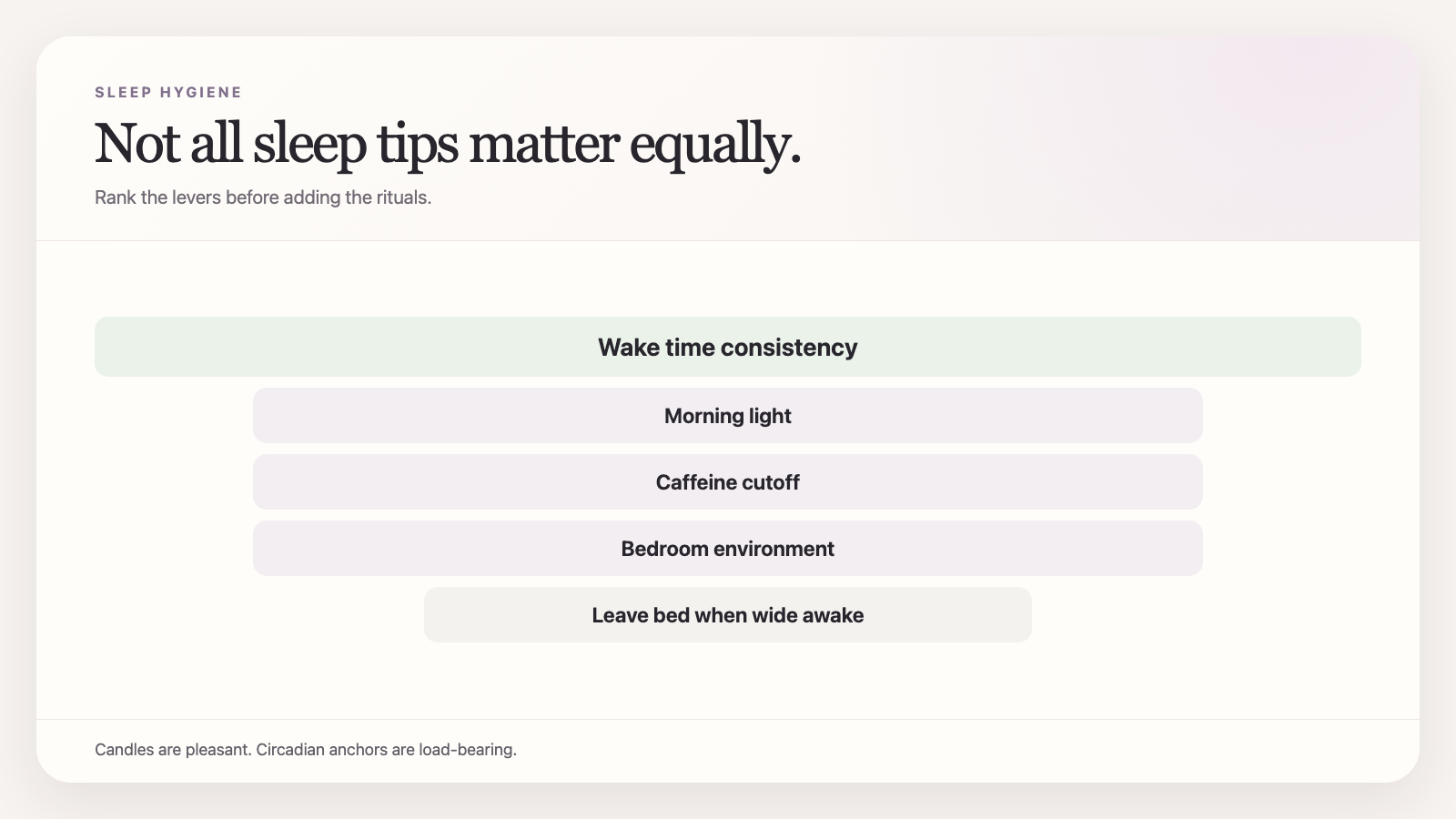
Sleep Hygiene: Which Fundamentals Actually Have Evidence
Sleep hygiene is useful, but not every tip deserves equal status. If you want the highest-return basics, focus first on wake-time consistency, light timing, caffeine cutoff, bedroom environment, and not lying awake in bed for hours trying to force sleep.

June 10, 2026
Caffeine and Hormones: Timing, Cortisol, and Cycle Effects
Caffeine is not automatically bad for hormones, but the same dose can land very differently depending on timing, cycle phase, sleep debt, and contraceptive use. The practical move is to stop asking whether caffeine is 'good or bad' and start tracking when it helps, when it spikes stress, and when it quietly wrecks sleep later.
June 7, 2026
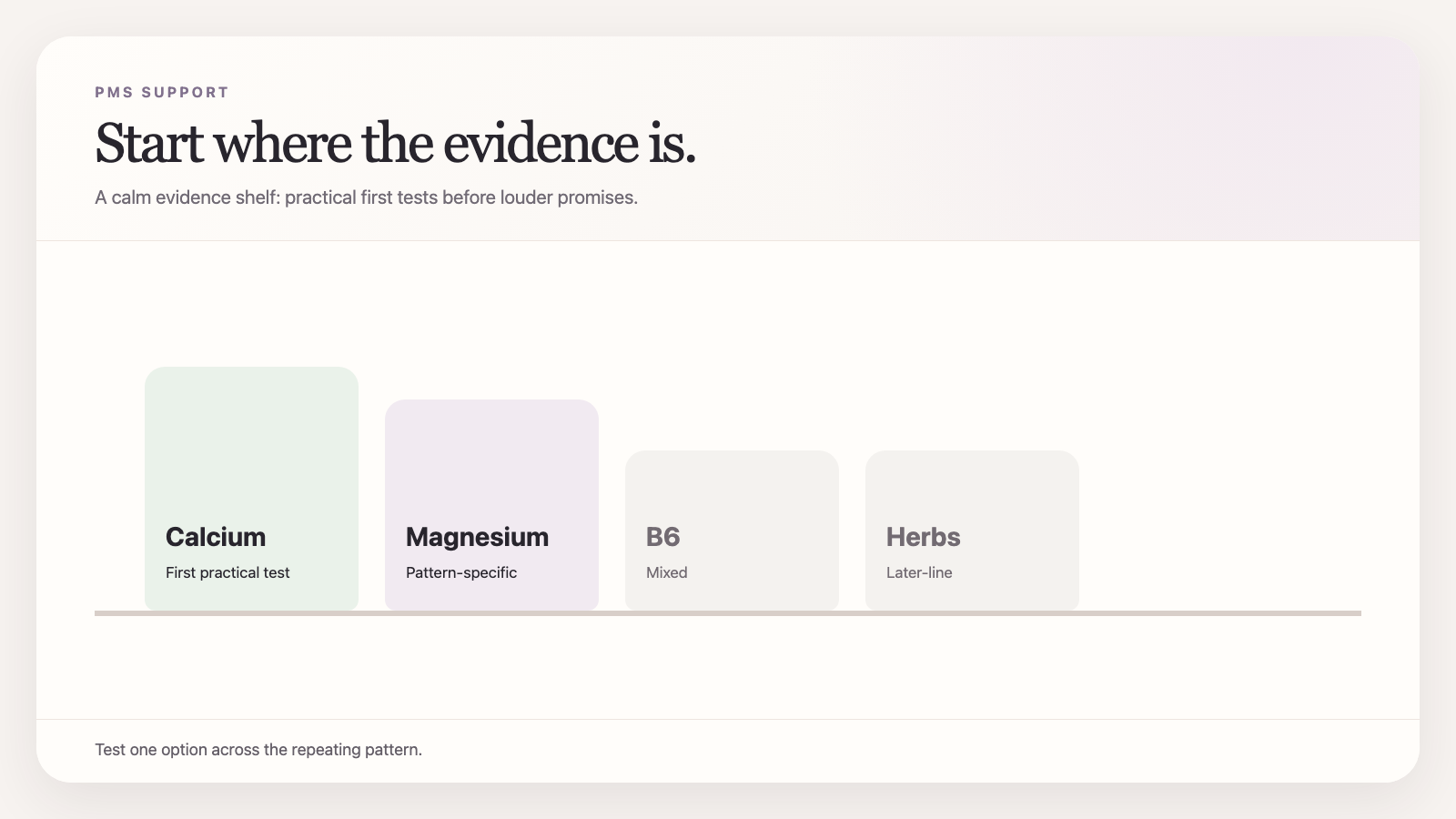
PMS Symptom Support: What the Evidence Actually Supports
PMS supplement advice gets messy because every symptom gets marketed like it needs a different miracle. The more useful approach is narrower: start with the few options that actually have decent evidence, match them to your symptom pattern, and track over at least 2 to 3 cycles instead of expecting a dramatic shift in one month.

June 3, 2026
Luteal Phase Fatigue: What's Actually Happening and What Helps
Luteal phase fatigue is not laziness, weak discipline, or proof that you suddenly forgot how to function for one week every month. The practical next step is to treat it like a repeating physiological pattern: track when it starts, how it overlaps with sleep, appetite, mood, and exercise tolerance, and support the cycle you actually have instead of arguing with it.
May 31, 2026
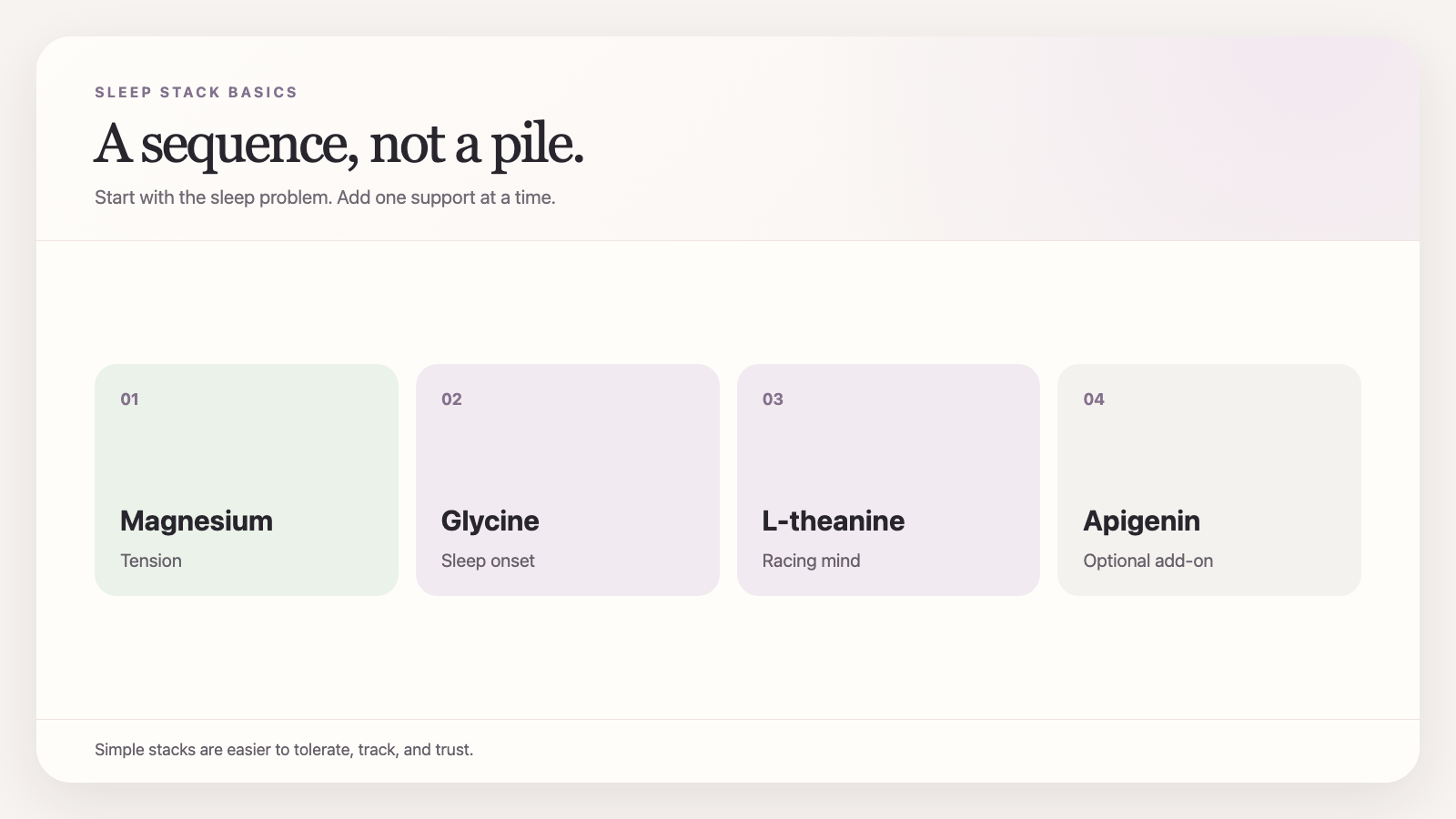
Sleep Stack Basics: Magnesium, Glycine, L-Theanine, and Apigenin
The best sleep stack is usually the simplest one. If you want to test supplements for sleep without creating a noisy mess, start with one foundation support, match it to your actual sleep problem, and track sleep onset, overnight waking, and next-day alertness for at least 2 to 4 weeks.
May 27, 2026
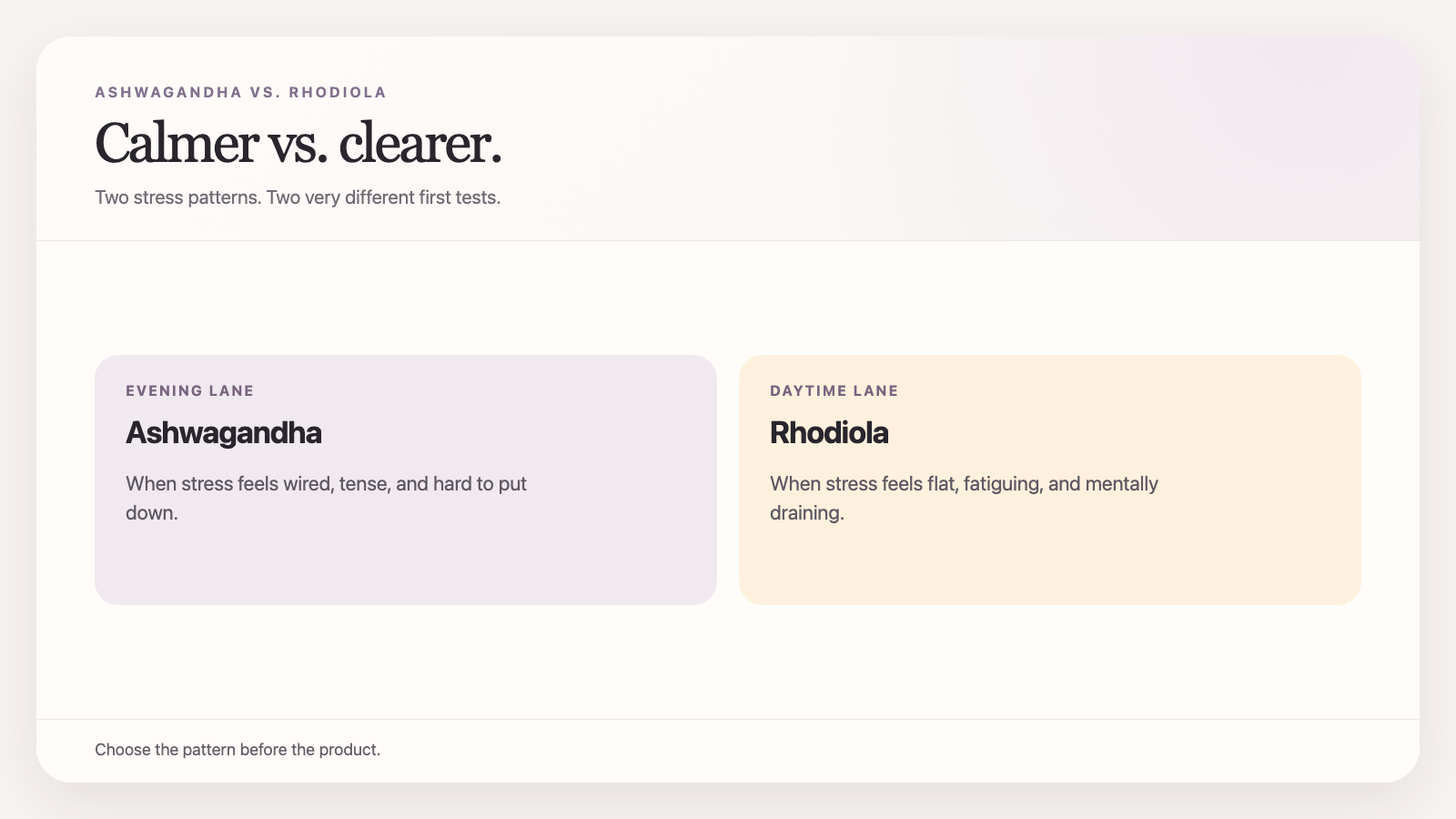
Ashwagandha vs. Rhodiola: When to Use Each
Ashwagandha and rhodiola get thrown into the same 'stress support' bucket, but they are not interchangeable. If your pattern looks wired, anxious, and sleep-fragile, ashwagandha is usually the cleaner test. If it looks mentally fatigued, flat, and performance-drained, rhodiola is often the better fit.

May 25, 2026
GLP-1s and Supplements: What You Actually Need to Know
The biggest supplement issue on GLP-1 medications is usually not finding a magical add-on for more weight loss. It is protecting protein intake, muscle, micronutrient status, and tolerance while appetite is lower and food volume drops.

May 13, 2026
Magnesium Glycinate vs. Oxide: Which Form Actually Works for Sleep
If you're trying magnesium for sleep, skip oxide and start with glycinate or bisglycinate instead. The evidence suggests a modest but real benefit when it's taken consistently for about 4 weeks, so the practical move is to use 200 to 400 mg elemental magnesium before bed and track sleep onset, overnight waking, and next-day recovery instead of judging it from one night.

May 10, 2026
Creatine for Women: What the Research Actually Says
Creatine is not just for men lifting heavy, and women may actually have more to gain because baseline stores tend to be lower. If you want to test it properly, use 3 to 5 g of creatine monohydrate daily for 4 to 6 weeks and track workout output, mid-day energy, focus, or mood before deciding whether it helped.
May 6, 2026
How Long Does It Take for Supplements to Work? A Realistic Guide
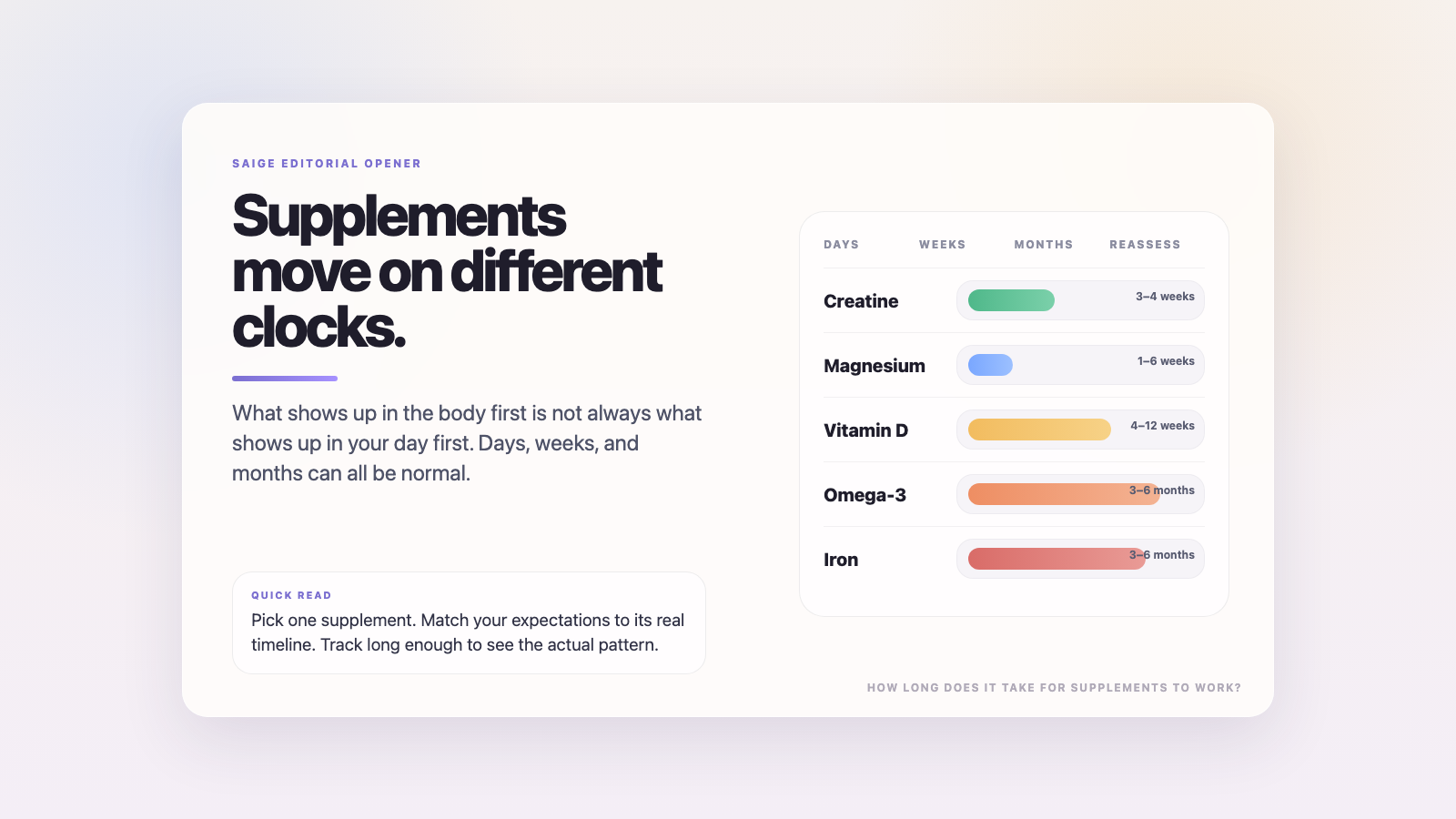
Most supplements take longer than people think, and “detectable in the body” is not the same as “noticeable in daily life.” The direct action here is to pick one supplement, match your expectations to its real timeline, and track one or two symptoms for at least 4 weeks before calling it ineffective.
May 3, 2026
The Complete Guide to Supplement Timing and Absorption
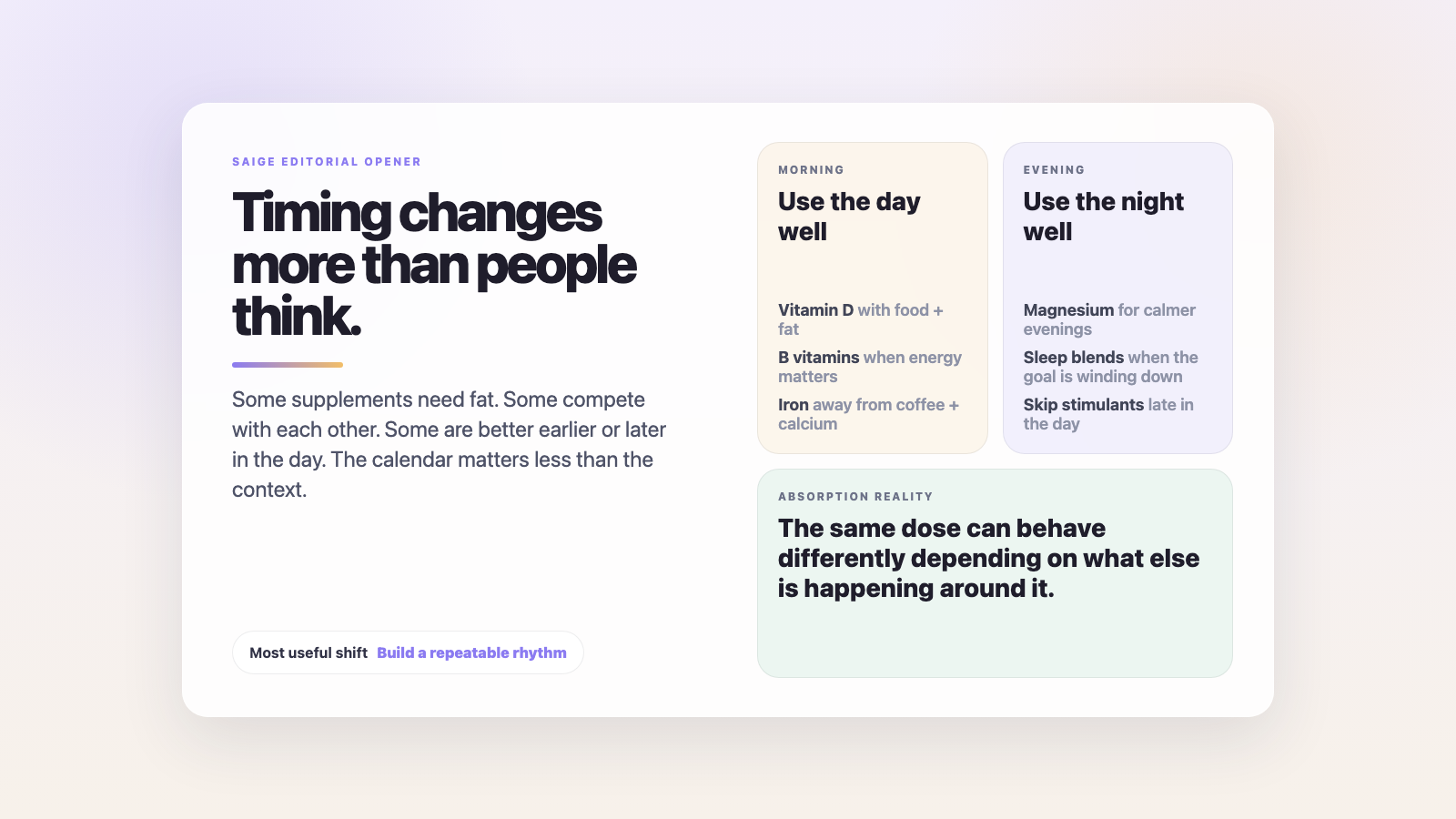
Supplement timing matters because absorption rules are different for fat-soluble vitamins, minerals, and stimulatory compounds. The simplest way to improve your results is to take vitamins A, D, E, and K with a fat-containing meal, separate iron from calcium and coffee, keep energizing supplements earlier in the day, and build a repeatable schedule you can actually follow.
April 29, 2026
Vitamin D and Mood: What the Research Actually Says
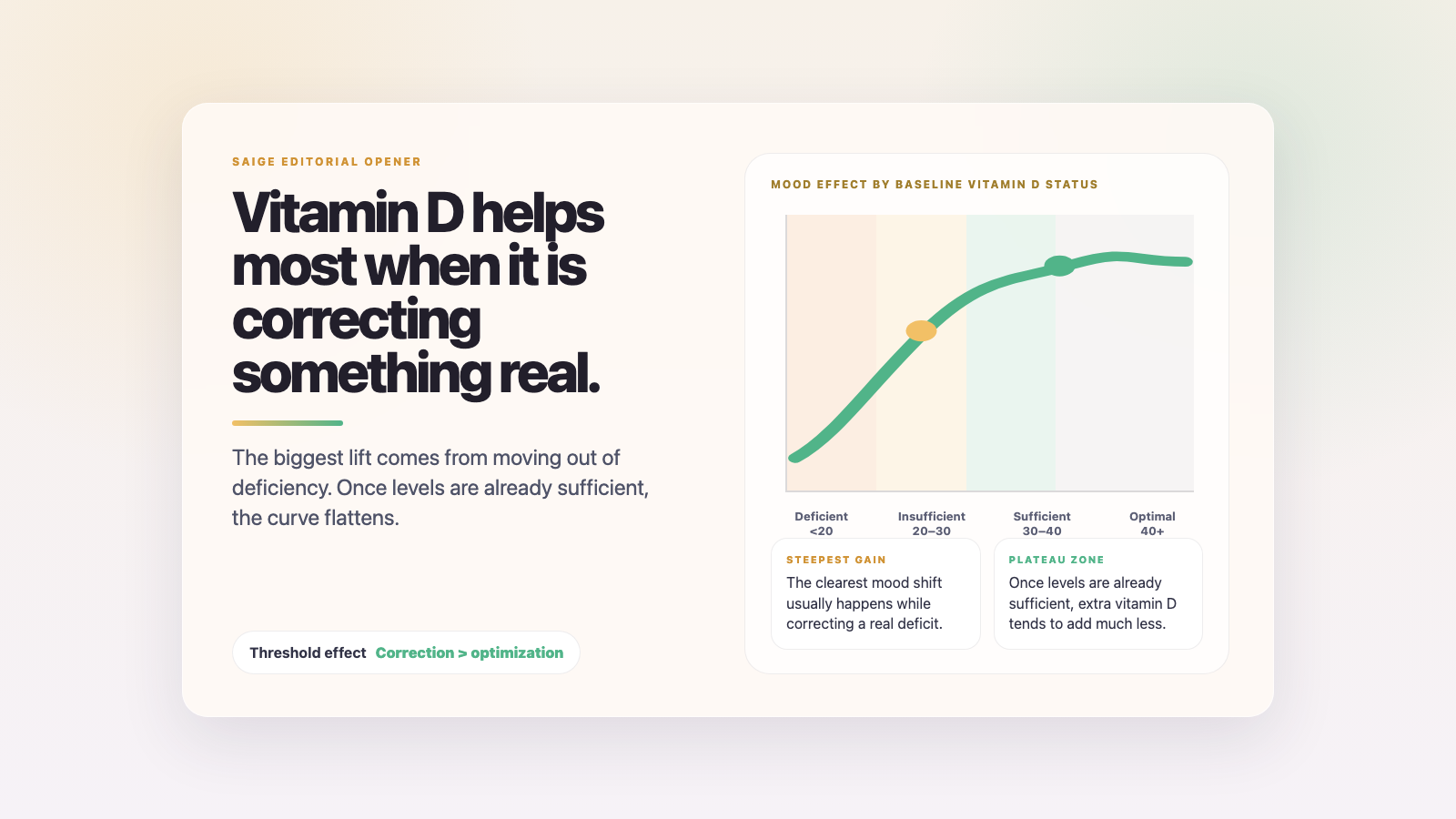
Vitamin D can help mood, but the clearest benefit shows up when someone is actually deficient and gives the correction enough time to work. If mood is your goal, check your baseline vitamin D status if you can, supplement consistently rather than randomly, and track mood and energy for 8 to 12 weeks instead of expecting a fast shift.
April 26, 2026
Omega-3 Forms Compared: Fish Oil, Krill, and Algae
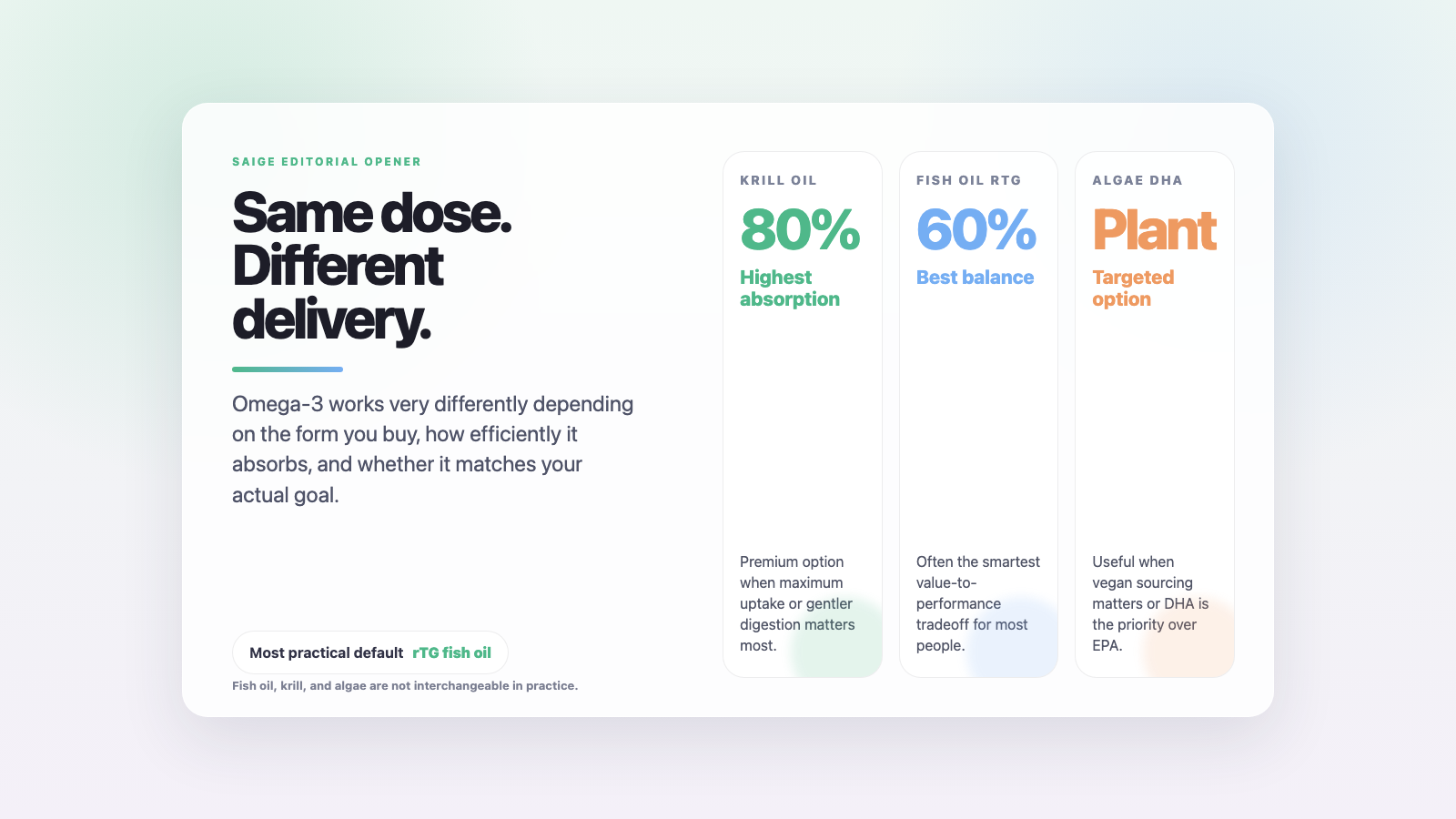
Omega-3 form changes how much EPA and DHA you actually absorb, which means the same dose can perform very differently depending on what you buy. The practical move is to choose rTG fish oil for value, krill for maximum absorption, or algae if you need a plant-based option, then take it with a fat-containing meal and reassess after at least 8 to 12 weeks.
April 22, 2026
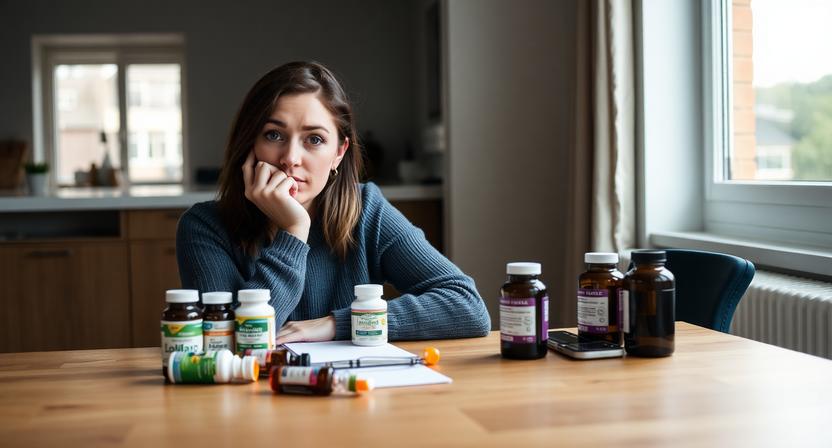
Supplement Stacking Mistakes That Quietly Blunt Your Results
The fastest way to make supplements confusing is to add too many at once and create interactions you cannot interpret. If you want cleaner results, introduce one supplement at a time, wait long enough for a signal to show up, and separate obvious competitors like iron and calcium instead of taking everything together.

April 19, 2026
Iron and Ferritin in Women: The Most Under-Tracked Nutrient
Normal serum iron does not rule out low ferritin, and many symptomatic women sit in that gray zone where labs say “normal” but the body says otherwise. If this sounds familiar, the direct next step is to look at ferritin specifically, not just iron or hemoglobin, and track fatigue, cold intolerance, hair shedding, and recovery over a longer 2 to 3 month window.
April 15, 2026
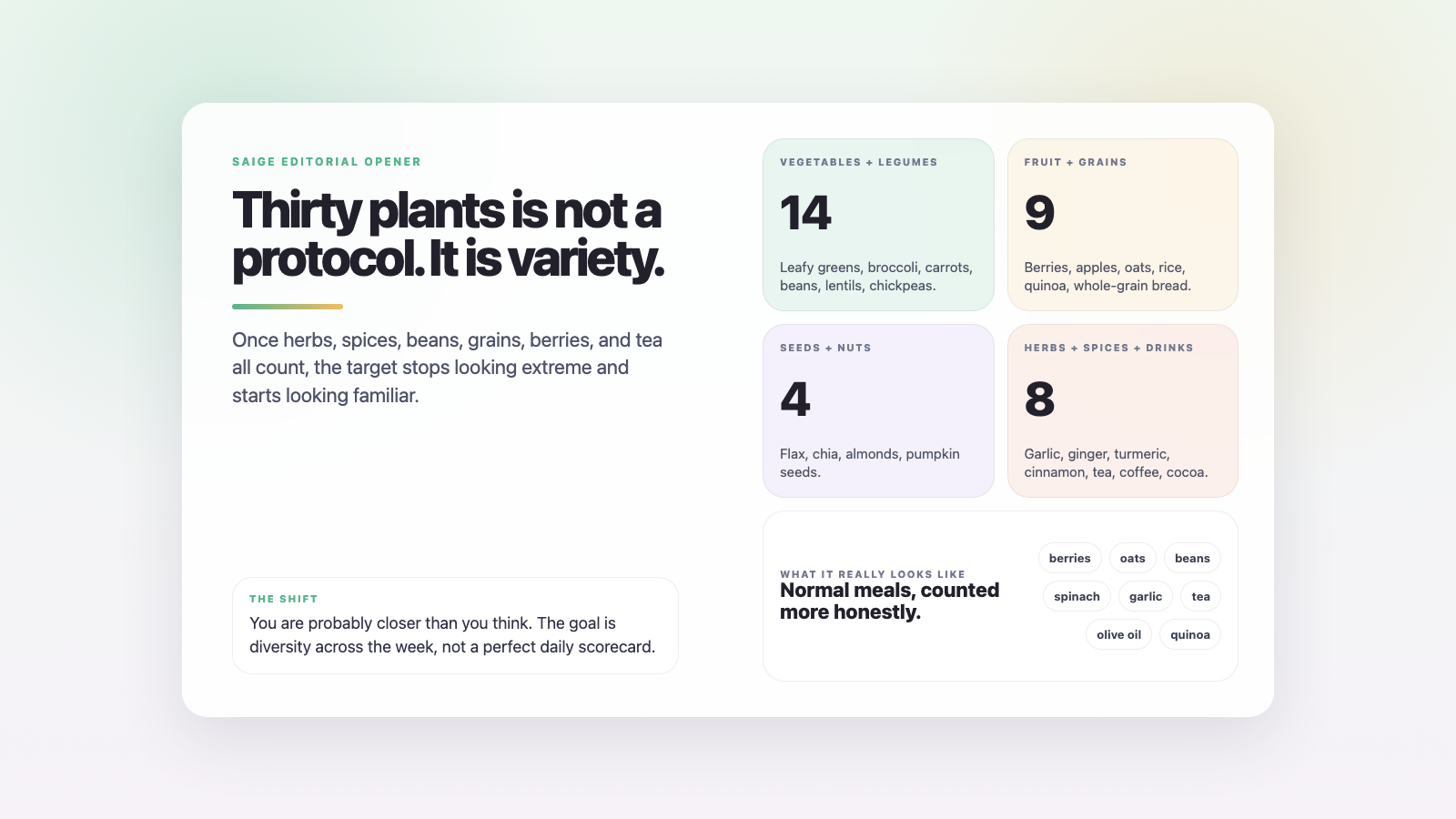
Fibermaxxing: What It Is and What the Evidence Actually Says
Fibermaxxing is directionally right, but the real win is diversity, not obsessively chasing a trend number overnight. The easiest way to act on this is to add plant variety gradually each week by using beans, whole grains, berries, vegetables, herbs, spices, tea, and seeds rather than trying to force a huge fiber jump all at once.

April 12, 2026
Supplements for Libido in Women: What the Evidence Actually Says
Most supplements marketed for women's libido are much better at selling fantasy than producing reliable results. The practical move is to treat libido as a pattern, not a personality trait: match the supplement to the likely bottleneck, test one option at a time for 6 to 8 weeks, and track desire, arousal, comfort, and satisfaction instead of expecting one capsule to flip a switch.