 Ovelia.appAvailable on the App Store
Morning Sunlight and Circadian Rhythm: The Mechanism
Morning sunlight works because it gives the brain a clear daytime signal, not because it is a magical wellness ritual. If sleep timing feels off, the practical move is to get outside soon after waking and treat light timing like a real biological input instead of a vague healthy habit.
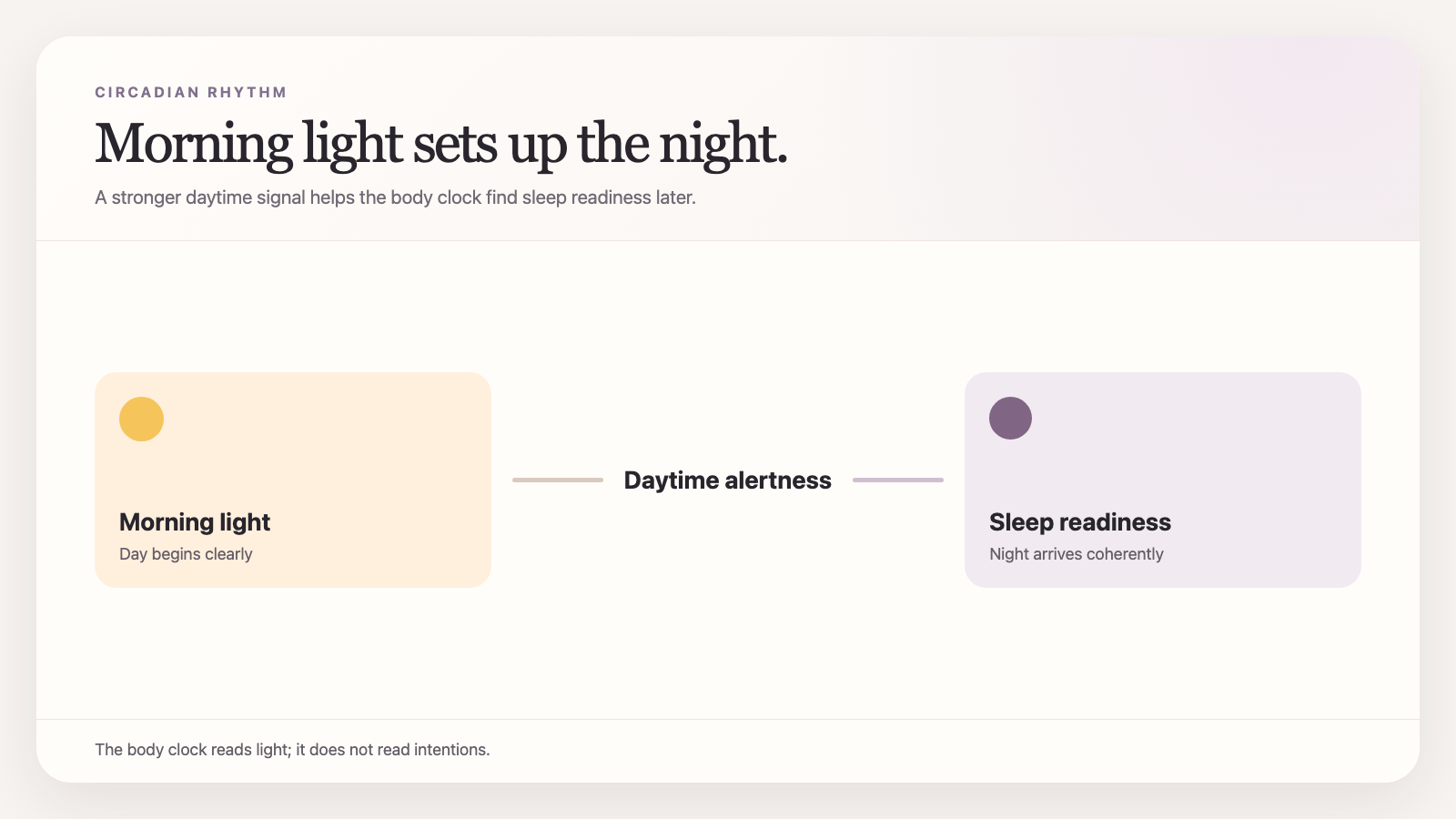 Your body clock is not guessing. It is reading signals, and light is the loudest one.
Morning sunlight is one of those habits that sounds too simple to deserve the hype.
Walk outside. Get light in your eyes. Sleep better later.
It sounds suspiciously neat, which is probably why a lot of people treat it like soft wellness folklore.
It is not.
Morning light matters because the circadian system needs a strong signal that daytime has started. Without that signal, the timing of alertness, melatonin release, body temperature, and sleep pressure can drift or weaken. The result is usually some blend of:
- harder sleep onset
- sluggish mornings
- alertness at the wrong time
- a body clock that feels less stable than your calendar
The mechanism in plain English
Light enters the eye and sends timing information to the brain's master clock, the suprachiasmatic nucleus. That signal helps coordinate melatonin suppression, alertness, cortisol timing, and the daily rhythm of the sleep-wake cycle.
Morning light matters especially because it helps anchor the clock early in the day. That makes it easier for the body to know when "day" is, which indirectly helps it know when "night" should begin too.
This is the key mental model:
Morning light does not directly sedate you at night. It helps your clock know what time it is.
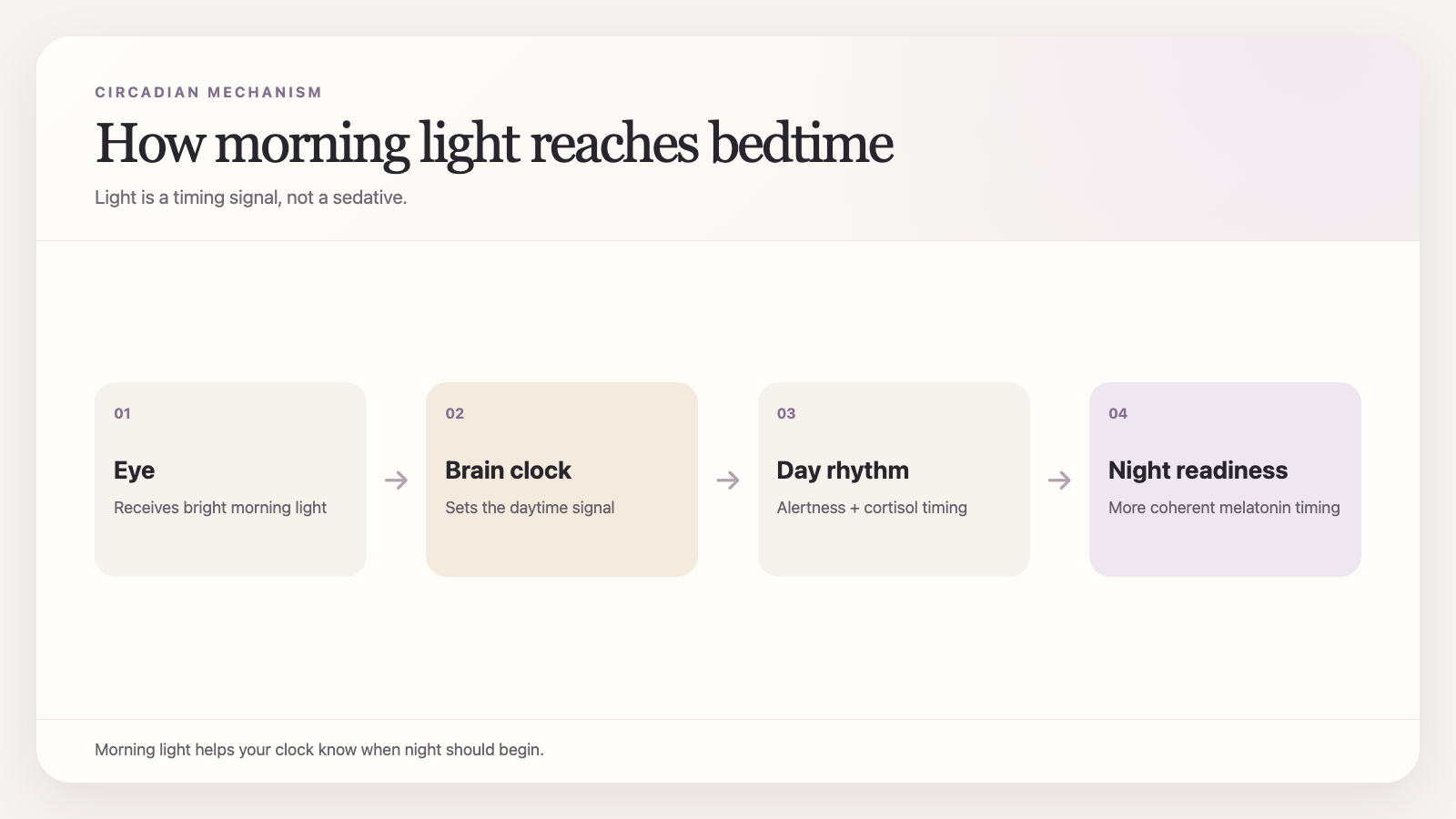 Morning light reaches bedtime by anchoring the timing system in between.
That is a much more useful explanation than "sunlight gives you energy."
Why the effect shows up later, not just right away
Yes, morning light can make you feel more alert. But the bigger effect is often delayed.
When the body gets a strong morning light signal, it can:
- suppress melatonin earlier
- support the cortisol awakening response
- improve daytime alertness
- make nighttime melatonin timing more coherent later
That is why the habit can improve both mornings and nights. It is not doing two unrelated things. It is tightening the whole rhythm.
What the evidence says
A review on light and human circadian rhythms, sleep, and mood lays out the basic biology clearly: light is one of the primary drivers of circadian entrainment in humans. Morning exposure is particularly helpful when the goal is reinforcing daytime alertness and sleep timing.
More recent population-level work suggests that morning sunlight exposure is associated with better sleep timing and sleep quality. The exact dose is not one sacred number that applies to everyone, but the direction is consistent: earlier natural light tends to help the rhythm more than waiting until noon.
That makes sense mechanistically too. Light late at night tends to delay the clock. Light earlier in the day tends to reinforce or advance it.
Who benefits most
Morning sunlight is useful for almost anyone, but it tends to matter most when:
- sleep timing drifts later than you want
- mornings feel foggy or slow
- you work indoors most of the day
- you are trying to recover from inconsistent sleep timing
- you have a lot of evening light exposure from screens and house lighting
If you already wake consistently, go outside early, and sleep well, you may not notice a dramatic difference. Fine. Not every good habit needs to feel dramatic to be real.
How to do it without making it annoying
This is where people overcomplicate a simple thing.
Reasonable approach:
- get outside within the first hour after waking if possible
- keep it consistent
- aim for enough exposure that it is actually brighter than indoor life
A walk is great. Sitting on the porch is fine. Walking the dog counts. What matters is that the light signal is real, not that the habit gets aesthetic points.
Cloudy morning light still beats typical indoor lighting by a mile. So this is not an excuse to give up every time the weather looks mediocre.
What morning sunlight does not fix
It does not override:
- late caffeine
- chaotic sleep timing
- chronic insomnia on its own
- sleep apnea
- a phone glowing in your face until midnight every night
This is important because people love turning one good lever into a total personality.
Morning light is foundational. It is not sovereign.
The easiest mistake to make
The easiest mistake is thinking that "being near windows" is the same thing.
Indoor light is usually dramatically dimmer than outdoor light, even on overcast mornings. If the goal is a circadian signal, outside usually wins by a lot.
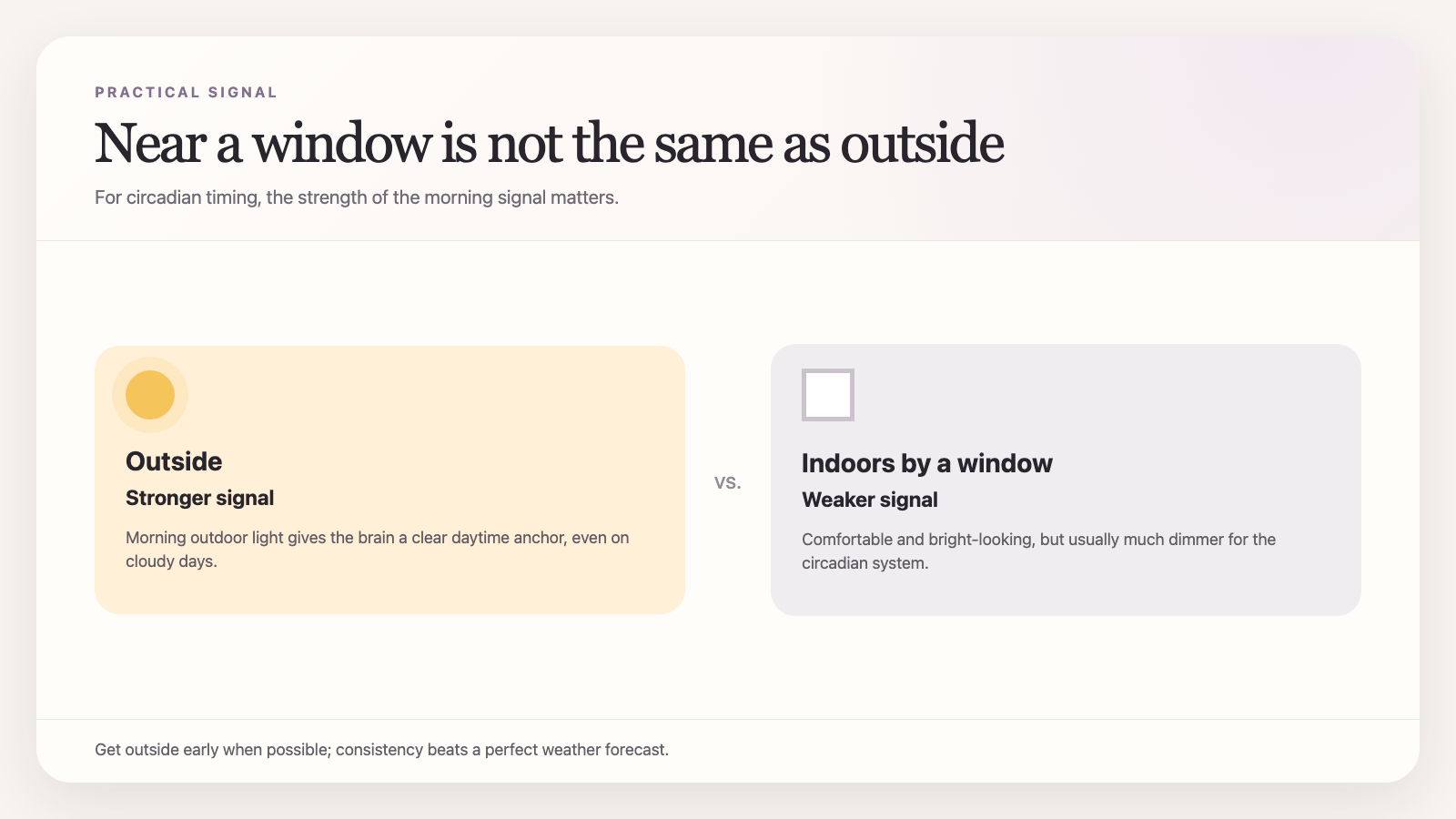 Near a window can look bright; outdoors usually gives the body clock a much clearer signal.
The second mistake is using morning sunlight while keeping every evening light habit unchanged. You can absolutely help the system in the morning and still confuse it later.
What to track
Track:
- wake time
- first outdoor light exposure
- bedtime
- sleep onset
- morning alertness
That is enough to show whether the rhythm is tightening.
Ovelia is useful here because light timing is one of those habits that sounds minor until you track it against sleep quality and realize it keeps showing up.
The bottom line
Morning sunlight works because it gives your circadian system a clearer daytime signal.
That helps:
- alertness in the morning
- sleep timing later
- the day-night rhythm overall
You do not need to romanticize it. You just need to do it consistently enough to let the biology work.
Sometimes the least glamorous habit is the one doing the most.
Sources:
Ready to track what actually works for you?
Ovelia turns what you read into a guided protocol you can actually follow.