 Ovelia.appAvailable on the App Store
Iron and Ferritin in Women: The Most Under-Tracked Nutrient
Normal serum iron does not rule out low ferritin, and many symptomatic women sit in that gray zone where labs say “normal” but the body says otherwise. If this sounds familiar, the direct next step is to look at ferritin specifically, not just iron or hemoglobin, and track fatigue, cold intolerance, hair shedding, and recovery over a longer 2 to 3 month window.
 The most frustrating version of this problem is hearing “everything looks normal” when your body clearly disagrees.
Normal iron doesn't mean optimal ferritin. The difference explains why so many women are exhausted despite normal bloodwork.
You've had this experience. You're tired all the time. Your energy crashes in the afternoon. Your hair is shedding more. You're cold constantly, even in normal temperatures. You mention it to your doctor. They run bloodwork. Iron comes back normal. "You're fine," they say.
Except you don't feel fine.
The problem is that your doctor probably didn't check ferritin. Or if they did, it came back at 18 or 22 ng/mL, which falls inside the "normal" range of 12-150 ng/mL, so they didn't think much of it. But you're living at ferritin 22, and you can feel the difference.
Serum Iron vs. Ferritin: What You're Actually Measuring
Your iron bloodwork usually includes serum iron and sometimes hemoglobin. These measure your circulating iron and your blood's oxygen-carrying capacity. They're useful for detecting anemia, the state where you don't have enough red blood cells.
Ferritin is different. Ferritin is a storage protein. It measures how much iron your body has stashed away in your organs, muscles, and bones. You can have normal circulating iron and depleted storage iron. That's where the disconnect happens.
When ferritin is low, your body is tapping into its reserves. You're not technically anemic yet (hemoglobin is still normal). But your buffer is shrinking. You have less iron to fall back on during stress, heavy periods, or injury.
The Reference Range Problem: "Normal" Isn't What You Think
Most labs set the lower limit of normal ferritin at 10-20 ng/mL. This works well if your goal is just to avoid anemia. If you don't want your iron to bottom out completely, 12 ng/mL technically meets that bar.
But the evidence suggests that functional iron deficiency starts showing up below 30-50 ng/mL. This is the kind where you feel tired, cold, foggy, and run-down but you're not technically anemic. Studies have found that women with ferritin below 50 ng/mL show abnormal markers of iron depletion and their bodies increase iron absorption (a sign they need more).
More telling: women with normal hemoglobin but ferritin below 50 ng/mL who take iron supplements report improvements in fatigue, brain fog, and exercise tolerance. One study found a direct link between falling ferritin (75 ng/mL down to 36 ng/mL) and declining muscle iron.
So "normal" in lab terms and "normal in your body" are different things. Many women sit between 15-35 ng/mL. They're technically not anemic. But they're also not optimal.
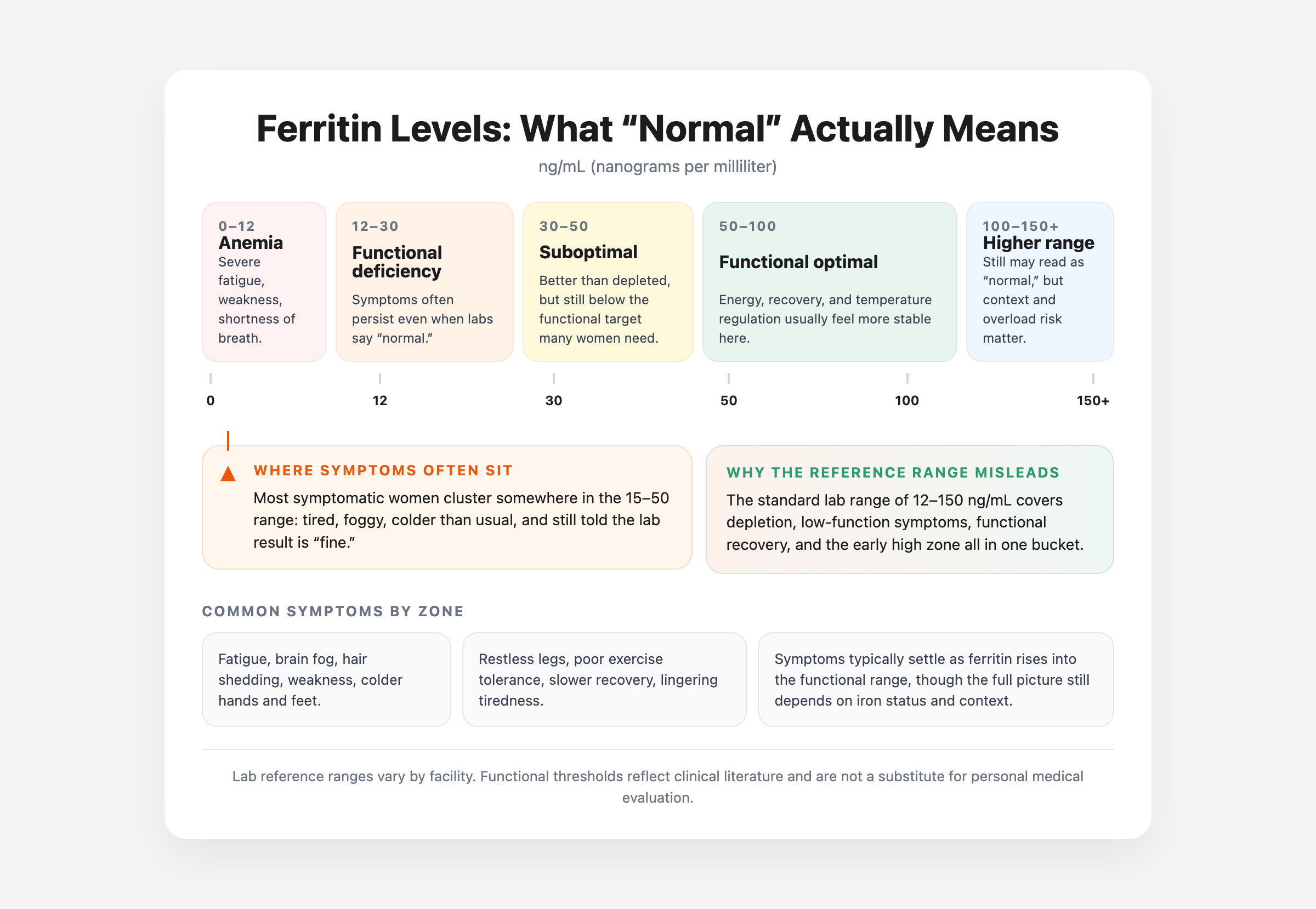 Lab reference ranges vary by facility. Functional thresholds based on clinical literature. Most symptomatic women sit in the 12–30 ng/mL range despite being within lab "normal."
The Symptoms of Low Ferritin (Even When Iron Is Normal)
If your ferritin is in the 15-40 range, you might experience:
Fatigue. Not depression or laziness, but bone-deep tiredness where normal amounts of sleep don't fix it. Afternoon crashes where everything suddenly stops.
Brain fog. Your thinking feels slower. Words don't come as easily. You're not sick, just can't concentrate the way you normally do.
Cold hands and feet. Your extremities stay cold even when the room is warm. This is partly because iron is needed for circulation and body temperature regulation.
Hair shedding. Hair growth requires iron. When ferritin drops, hair follicles shift into a resting phase and shed.
Restless legs. That crawly, itchy feeling in your legs at night or when you sit down. It's real and it's linked to low iron stores.
Shortness of breath on exertion. You run a flight of stairs and feel winded when you normally wouldn't. This is because your blood can't carry oxygen efficiently without enough iron.
Reduced exercise tolerance. You can't push as hard. Recovery takes longer. Muscles feel more fatigued at lower intensities than they used to.
Headaches and dizziness. Less common, but shows up when ferritin gets really low.
The problem: these symptoms blur together. They overlap with stress, sleep deprivation, depression, thyroid issues. Your intuition can't isolate iron. You need data.
Why Women Are Disproportionately Affected
Women lose blood monthly. That's iron loss, direct and recurring. A typical period loses 15-30 mg of iron. Heavy periods can be 100+ mg. Add in that most women eat less meat and more plants, which means less dietary iron overall.
Add pregnancy (depletes stores) and postpartum recovery (rebuilding what you lost), and the window where ferritin stays optimal is narrower for women than for men.
This isn't a flaw. It's just the physiology. Women need to think about iron differently.
How to Address It: Food, Timing, and Supplements
Prioritize heme iron. Red meat, poultry, and fish contain heme iron, which absorbs at 15-35%. Plant-based iron (beans, spinach, fortified grains) is nonheme, which absorbs at 2-20%. If you eat mostly plants, your absolute iron intake needs to be higher to compensate.
Pair nonheme iron with vitamin C. If you're eating a plant-based meal with iron, add something rich in vitamin C: citrus, berries, tomatoes, bell peppers. Vitamin C converts ferric iron to ferrous iron, which is more absorbable. This can triple absorption of plant-based iron.
Keep calcium and iron separate. If you're supplementing with iron, don't take it with calcium or within a few hours of a dairy-heavy meal. Calcium (at doses above 800 mg) blocks iron absorption significantly. Coffee and tea also inhibit iron absorption, so avoid them near iron-rich meals or supplements.
Choose ferrous bisglycinate if supplementing. Ferrous bisglycinate is a chelated form of iron that's gentler on your stomach than other iron supplements. Ferrous sulfate and ferrous fumarate work, but they're more likely to cause nausea, constipation, or black stools. Bisglycinate absorbs well and causes fewer GI issues.
Take it consistently. Iron supplementation works slowly. You're rebuilding stores, not just replacing circulating iron. Expect 3-6 months to see meaningful changes in ferritin.
Timeline: Ferritin Recovery Moves Slowly
Most people give up here. You start iron, wait two weeks, feel no different, assume it didn't work.
Ferritin recovers in months, not weeks. A reasonable expectation: 8-12 mg/kg of iron supplementation will raise ferritin by roughly 8-10 ng/mL per month (assuming you're consistent and absorbing it). If your ferritin is 20 and you want to get to 50, you're looking at 3-4 months.
Symptoms improve gradually and unevenly. Hair might stop shedding after 6 weeks. Brain fog might lift after 8 weeks. Exercise tolerance might take 12 weeks. You don't wake up one day feeling perfect. Instead you notice you're less tired on Tuesday than three weeks ago, then less cold on a Saturday, then you realize you can run without getting as winded.
This is why tracking matters. Your intuition will not catch these slow changes. You need a log.
What to Track: Why Intuition and Memory Both Fail
Intuition fails because improvement is invisible. You don't feel the gradual rise in ferritin. You feel the absence of worsening. The change is too slow to notice consciously.
Memory fails because you made a baseline error. Before you started iron, you were tired. You got used to being tired. "This is just how I am," you think. After two months of supplements, your baseline shifts upward. You're less tired. But you don't remember being more tired before. That's your new normal now. Memory collapses before and after into one continuous state.
The fix is to track energy (1-10 scale), brain clarity, cold/hot tolerance, and anything else you suspect might change. Do it before you start iron, then keep doing it after. In three months, look back. You'll see data that your intuition missed.
If you want a simpler way to stay consistent with that, Ovelia can help you keep the iron protocol, reminders, and symptom tracking together so the slow changes are easier to notice.
The people who fix their ferritin log it. Not because they're more disciplined, but because they have actual evidence something changed.
The Doctor Conversation
If your bloodwork shows normal hemoglobin but ferritin wasn't tested, ask specifically for it. You can say: "I have fatigue and brain fog. Can you check my ferritin?" Most doctors will accommodate this. Some labs will flag ferritin as "normal" even at 15-20 ng/mL, but you'll see the actual number.
If your ferritin is below 50 ng/mL and you have symptoms that match low iron, a reasonable trial is 3-4 months of consistent supplementation while tracking your symptoms. Iron supplementation is safe at therapeutic doses (25-65 mg elemental iron per day). Constipation and nausea are the main side effects, which is why bisglycinate form helps.
If you're a vegetarian or vegan, or if you have heavy periods, ferritin becomes even more important to monitor. Check it annually if you're in either of those categories.
See Also
- Post 4: The Supplement Timing Guide — When (and Why) It Matters — how to time iron away from calcium-blocking meals
- Post 7: Supplement Stacking Mistakes That Quietly Blunt Your Results — iron and calcium absorption conflict, tracking one variable at a time
Sources:
-
Sex, lies, and iron deficiency: a call to change ferritin reference ranges — Argues that standard ferritin ranges are too low for detecting functional deficiency in women; proposes 30-50 ng/mL as a more appropriate threshold
-
Iron deficiency without anaemia: a diagnosis that matters — Reviews the mismatch between normal hemoglobin and depleted iron stores, including symptom burden in women with serum ferritin below 50 ng/mL
-
Efficacy of Plant-Based Iron and Vitamin C in Adults With Iron Deficiency Anemia: A Randomized, Double-Blind Clinical Study — Demonstrates vitamin C enhancement of plant-based iron absorption in clinical settings
Ready to track what actually works for you?
Ovelia turns what you read into a guided protocol you can actually follow.