 Ovelia.appAvailable on the App Store
Gut Health and Bloating: Patterns and What to Try
Bloating is usually a pattern problem, not one universal diagnosis. The useful move is to sort the likely bucket first, then test the smallest useful change instead of buying a probiotic and hoping for the best.
 Bloating is common enough to be boring and annoying enough to ruin your day. That combination creates terrible advice.
Bloating gets lumped into "gut health" so often that the word has almost stopped meaning anything.
That is a problem because people do very different things depending on what they think bloating means. Some buy probiotics. Some cut random foods. Some start a prebiotic powder because the internet told them it was "good for the microbiome." A lot of those moves are too blunt, too fast, or aimed at the wrong layer of the problem.
The useful move is not to ask, "What is the one fix for bloating?" It is to ask, "What pattern is causing this, and what should I try first?"
Bloating is usually a pattern, not a personality trait
Bloating can show up from a few different directions:
- meal size or composition
- fiber changes that ramped too fast
- constipation or slower transit
- sensitivity to specific fermentable foods
- stress and nervous system load
- supplement experiments that changed too many variables
That is why two people can both say "my gut is off" and need completely different next steps.
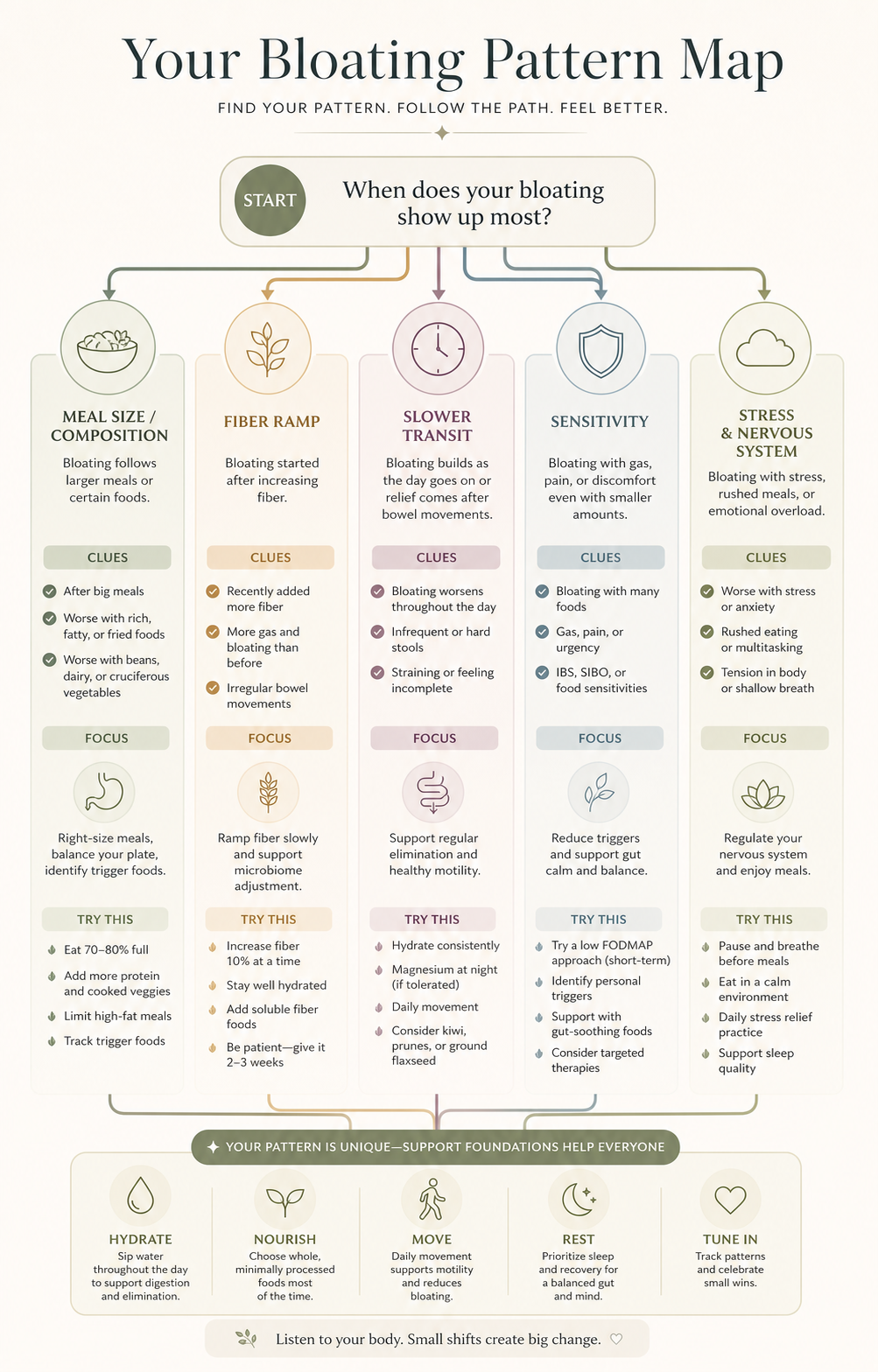 If you do not sort the pattern first, every fix feels random.
Start with the obvious levers
Before you buy anything, check the basics:
1. Meal composition
Very large meals, very greasy meals, and meals with a lot of random stacking can all leave the gut feeling overloaded. For some people, the issue is not a bad gut. It is just a gut that is tired of being overworked.
2. Fiber ramp
Fiber is good, but too much too fast is how people accidentally create a bloating problem while trying to fix one.
If you recently increased fiber, the question is not "is fiber bad?" The question is "did I ramp it faster than my gut could adapt?"
3. Hydration and timing
Low fluid intake can make fiber feel much worse. So can eating in a chaotic way all day and then expecting your digestion to behave perfectly at night.
4. Constipation or slower transit
Sometimes bloating is less about gas and more about not moving things through well. That changes the whole conversation.
When a probiotic makes sense
Probiotics are not magic gut-health vitamins.
They can be reasonable when you have a specific reason to test a specific product or strain. But broad, generic probiotic shopping is a good way to spend money while learning nothing.
If the gut is already reactive, a random probiotic can be too much, too soon.
When a prebiotic-first approach makes more sense
If the bigger issue is low fiber diversity or a fairly bland diet, prebiotic work often makes more sense than adding live microbes first.
That can mean:
- more plant variety
- more tolerable fiber sources
- slower ramps
- simpler food patterns before complicated supplements
The point is not to become a gut purist. The point is to give the existing system something useful to work with.
What not to do
Do not do all of this at once:
- new probiotic
- new fiber powder
- new meal timing
- random food elimination
- then wonder why the result is unreadable
That is not a protocol. That is a guessing contest.
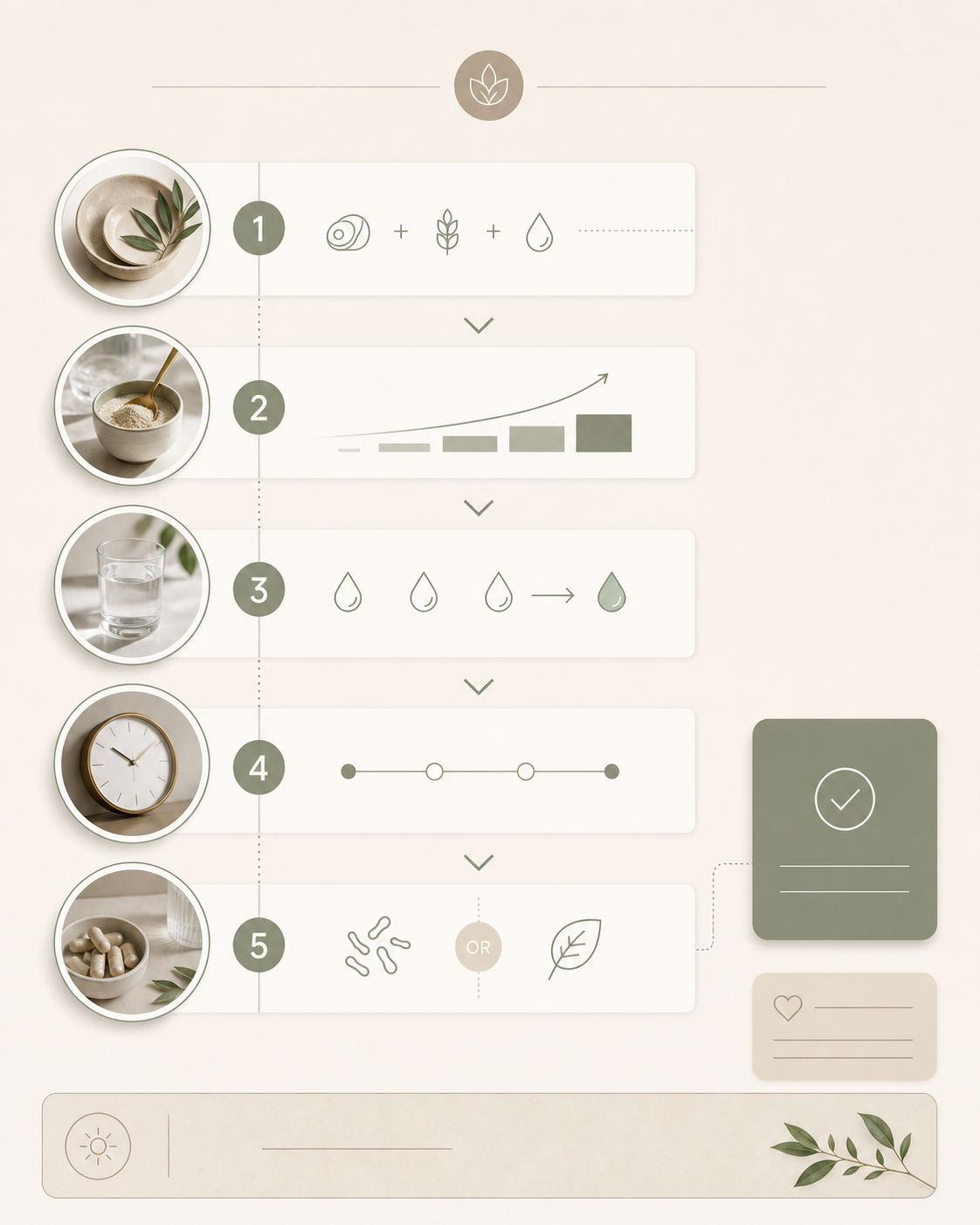 Start with food pattern, fiber tolerance, and timing before you turn bloating into a supplement hobby.
What to track
Track a few things for a couple of weeks:
- bloating severity
- bowel regularity
- stool consistency
- meal pattern changes
- supplement start dates
That is enough to tell whether the gut is improving or just reacting to whatever you changed today.
This is where Ovelia fits. Gut health gets messy fast when memory is doing all the work.
Bottom line
Bloating is usually not one thing, which is why one-size-fits-all advice feels so useless.
If you want the short version:
- identify the pattern
- fix the obvious levers first
- use probiotics or prebiotics only when they fit the job
- track the change long enough to know if it actually helped
That is less exciting than a miracle capsule. It is also more likely to work.
Sources:
Ready to track what actually works for you?
Ovelia turns what you read into a guided protocol you can actually follow.