 Ovelia.appAvailable on the App Store
Sleep Environment: Light, Temperature, and Noise
A lot of bad sleep is just bad room math. If the room is too bright, too warm, or too noisy, no bedtime ritual is going to fully cancel that out. Fix the room first, then judge the rest.
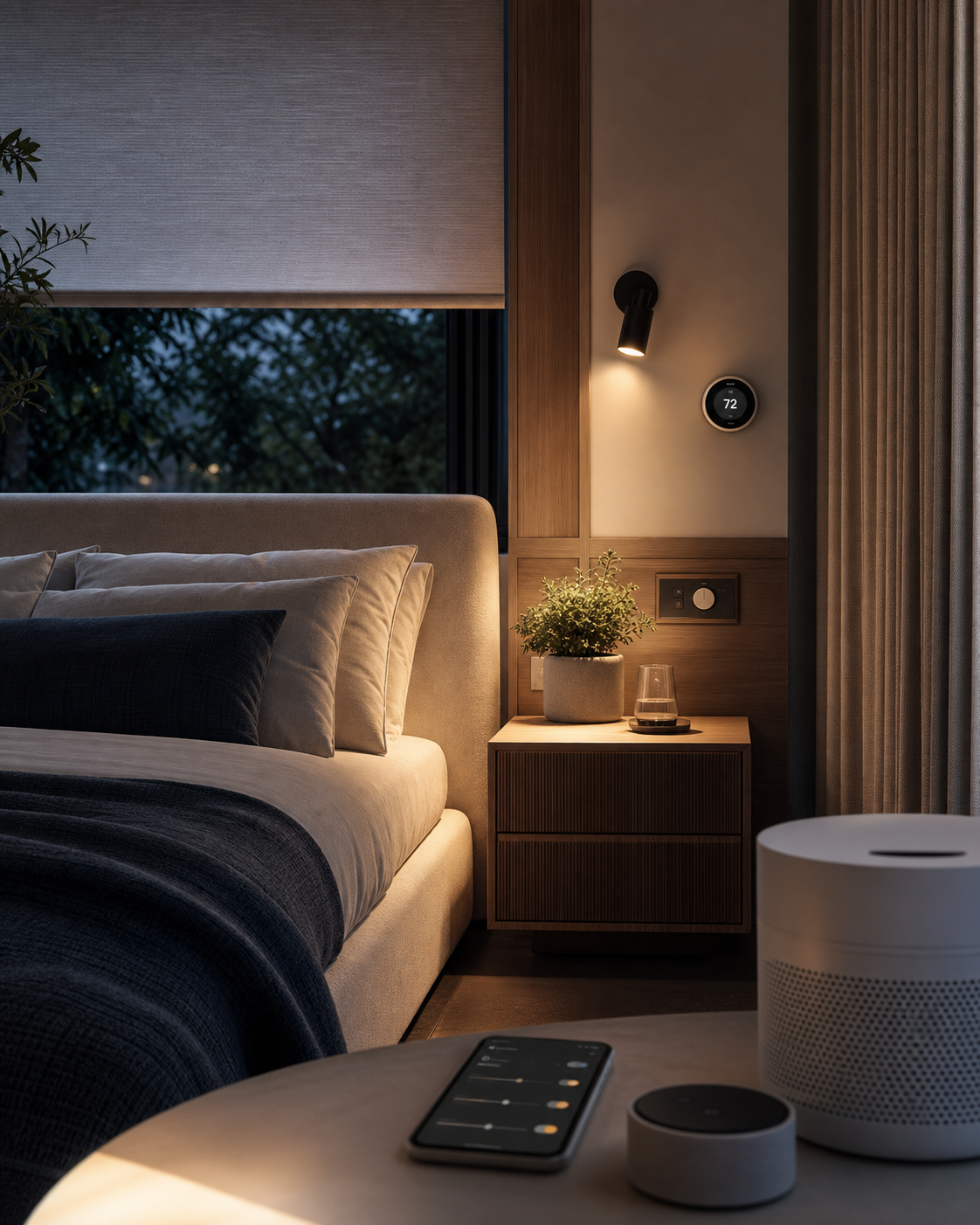 A lot of bad sleep is just bad room math.
People love to make sleep complicated.
They buy supplements, apps, trackers, sprays, candles, masks, and bedtime rituals that feel soothing right up until the moment they realize the room itself is still working against them.
Sleep problems are often environmental before they are anything else.
That is not a glamorous answer, but it is a useful one. If your room is too bright, too warm, or too noisy, no bedtime routine is going to fully cancel that out.
The three levers that matter most
If you want the short list, it is this:
- light
- temperature
- noise
Everything else is secondary until those are not sabotaging you.
Light
Light tells the brain what time it is. Bright light at night makes it harder to feel sleepy. Morning light helps anchor the day.
That means the room setup should work with your body clock instead of confusing it. If your bedroom is bright at night or your first light exposure is inconsistent, you are making sleep harder than it needs to be.
Temperature
People underestimate how much heat matters.
A room that is slightly too warm can make sleep feel shallow, sticky, or interrupted. Most people sleep better when the room is cooler than their daytime comfort settings. The exact number matters less than the direction of the problem: too hot is usually bad.
Noise
Noise does not need to be loud to be annoying.
Little disruptions can fragment sleep even when you do not fully wake up. That is why a quiet room, white noise, earplugs, or other practical buffering can matter more than people expect.
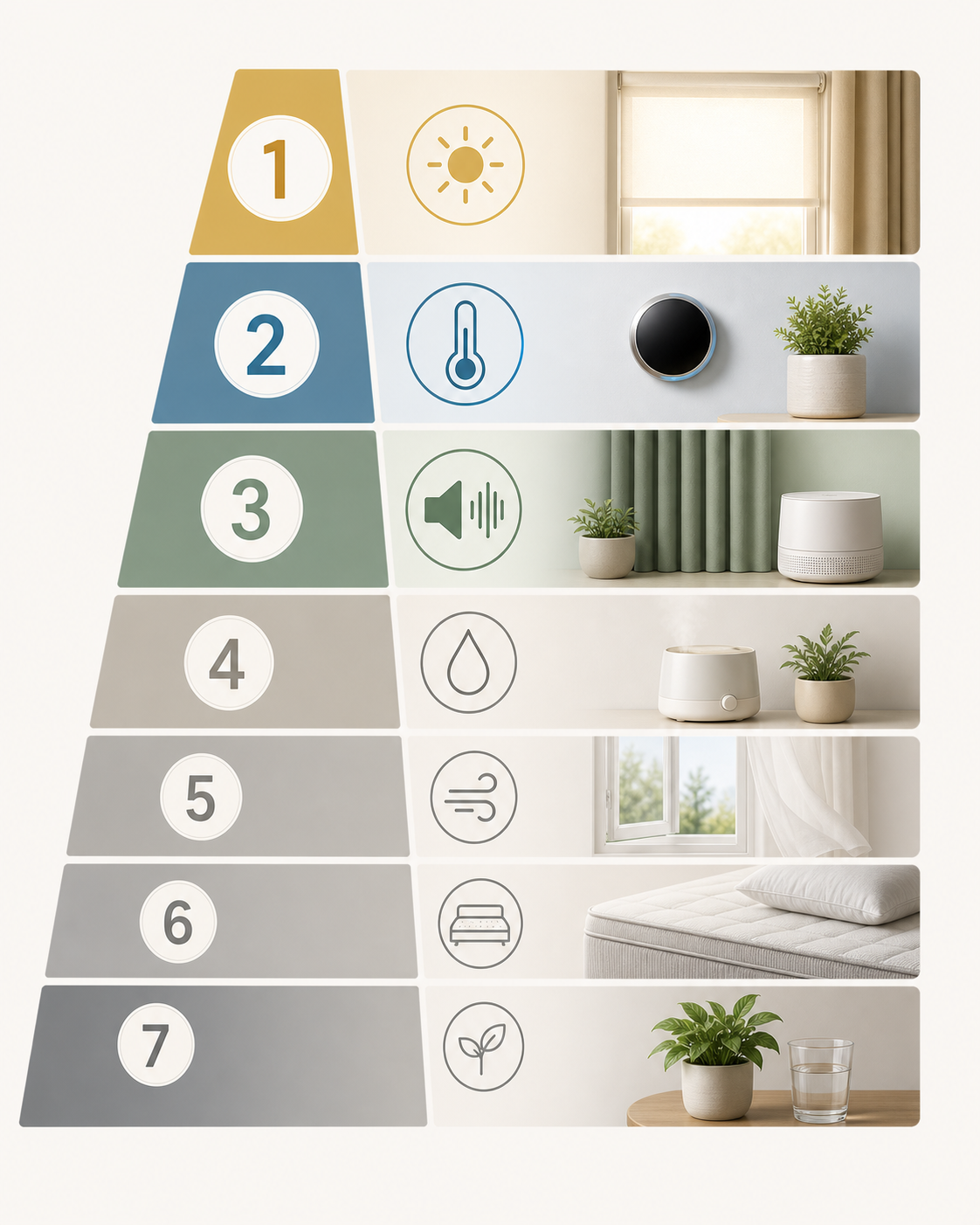 Fix the room before you start decorating the bedtime vibe.
Highest-return fixes first
Do not turn this into a renovation project.
Start with:
- reduce bright light at night
- make the room cooler
- reduce obvious noise interruptions
- only then get fancy with the rest
That order is important because it keeps you focused on the levers that are most likely to change sleep quality in a measurable way.
What people get wrong
The biggest mistake is treating sleep environment like interior design.
A nice room can still be a bad sleep room.
Another mistake is trying to change five things at once. If you swap the bedding, buy a new lamp, start white noise, and move the thermostat all in the same week, you will not know which change mattered.
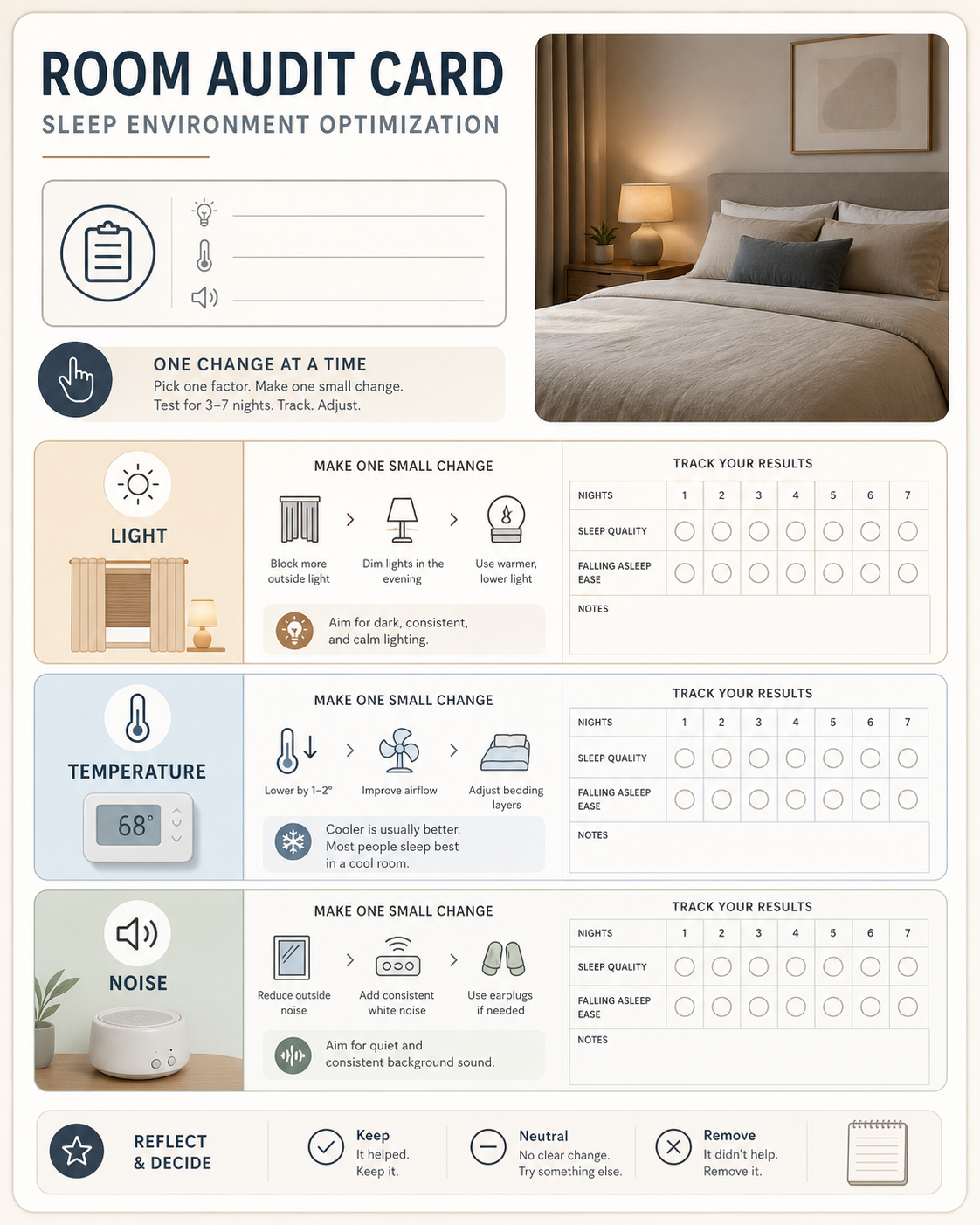 One change at a time is slower. It is also readable.
What to track
Track:
- sleep onset
- overnight waking
- room temperature or how hot you felt
- light exposure before bed
- noise interruptions
That is enough to tell whether the room is helping or just looking expensive.
Ovelia is useful here because sleep quality is often a pattern, not a single night. If you can see the room changes against your own data, the whole thing becomes less abstract.
Bottom line
The bedroom matters.
If sleep is fragile, start with the environment that is shaping it:
- keep it darker
- keep it cooler
- keep it quieter
That is not a hack. It is just basic cause and effect, which turns out to be annoyingly effective.
Sources:
Ready to track what actually works for you?
Ovelia turns what you read into a guided protocol you can actually follow.