 Ovelia.appAvailable on the App Store
Probiotics vs. Prebiotics: What the Difference Means for You
Probiotics and prebiotics are not rival teams, and most people confuse them because both get sold as generic 'gut health' products. The practical move is to stop asking which one is universally better and ask whether you are trying to add a specific strain, feed existing microbes, or simply eat in a way that makes your gut less chaotic.
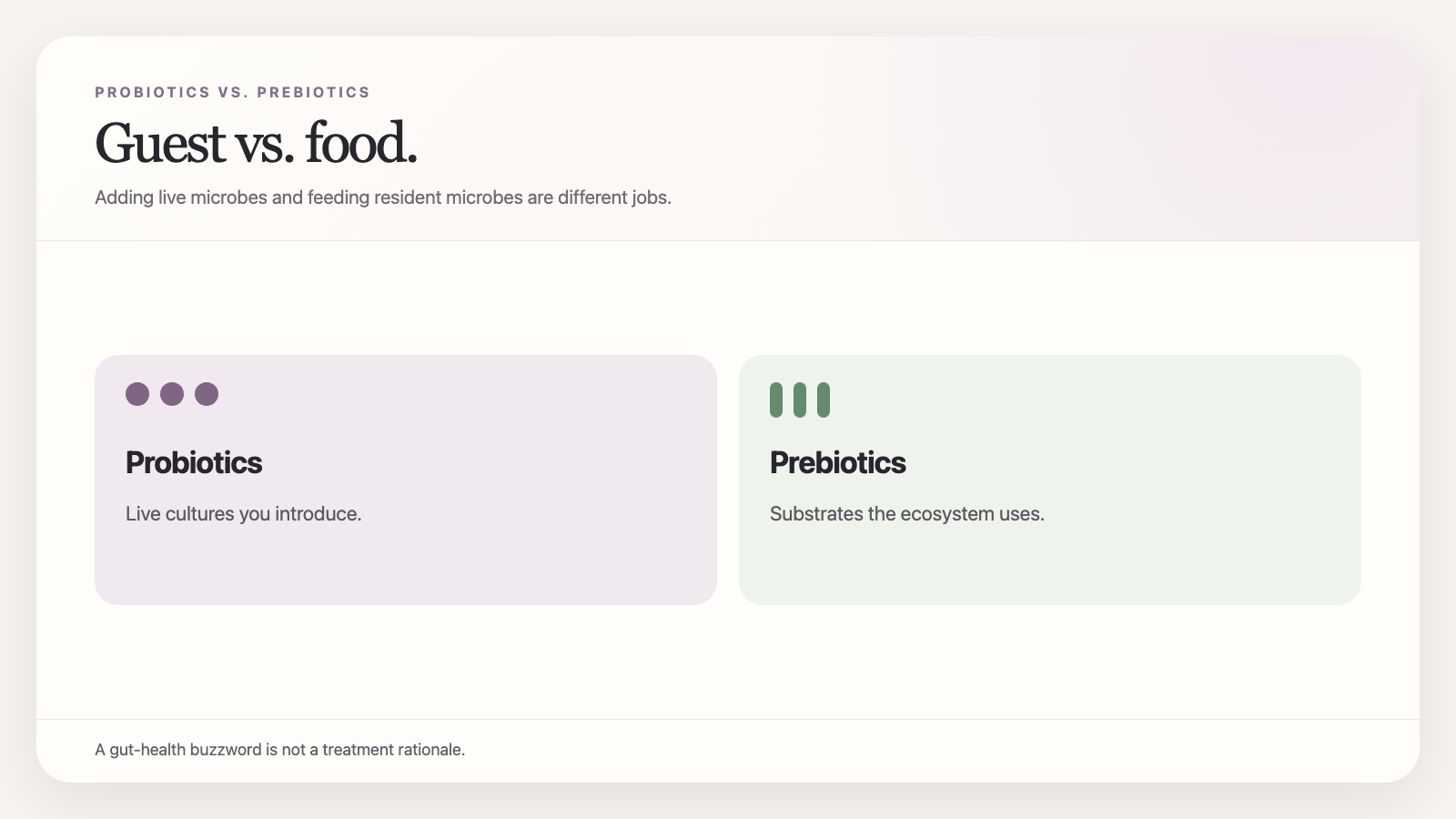 One is the guest. The other is the food. Confusing them does not help your gut.
Probiotics and prebiotics get treated like they are basically the same thing with slightly different packaging.
They are not.
That matters because the wrong mental model leads people to buy a probiotic when what they really need is more fermentable fiber, or to hammer prebiotic powders when their gut is already so reactive that adding fuel just creates more bloating.
The useful distinction is simple:
- Probiotics are live microorganisms you consume.
- Prebiotics are substrates, usually specific fibers or compounds, that feed beneficial microbes already living in the gut.
That does not automatically make one better. It makes them different tools.
What probiotics are actually doing
When you take a probiotic, you are introducing specific strains or combinations of microbes that may influence the gut environment through several mechanisms:
- interacting with resident microbes
- producing metabolites
- supporting barrier function
- modulating immune signaling
The key phrase is specific strains.
That is why "probiotics work" is too broad to be meaningful. A probiotic is not one thing. Different strains have different evidence profiles and different potential uses.
This is also why generic shelf logic fails. Two bottles both saying "probiotic" can be doing very different jobs.
What prebiotics are actually doing
Prebiotics are not bacteria. They are food for bacteria.
Classically, that includes fibers and compounds such as fructans, inulin, and certain oligosaccharides that beneficial microbes can use preferentially. As those microbes ferment the substrate, they can produce metabolites like short-chain fatty acids that affect gut health, metabolism, and immune function.
Prebiotics often matter more than people realize because they help determine which microbes are favored over time. In other words, you can add bacteria, but if the ecosystem does not support them or your overall fiber pattern is poor, the result may be less impressive than the marketing promised.
The practical difference
Here is the simplest way to think about it:
- Probiotic = adding organisms
- Prebiotic = feeding organisms
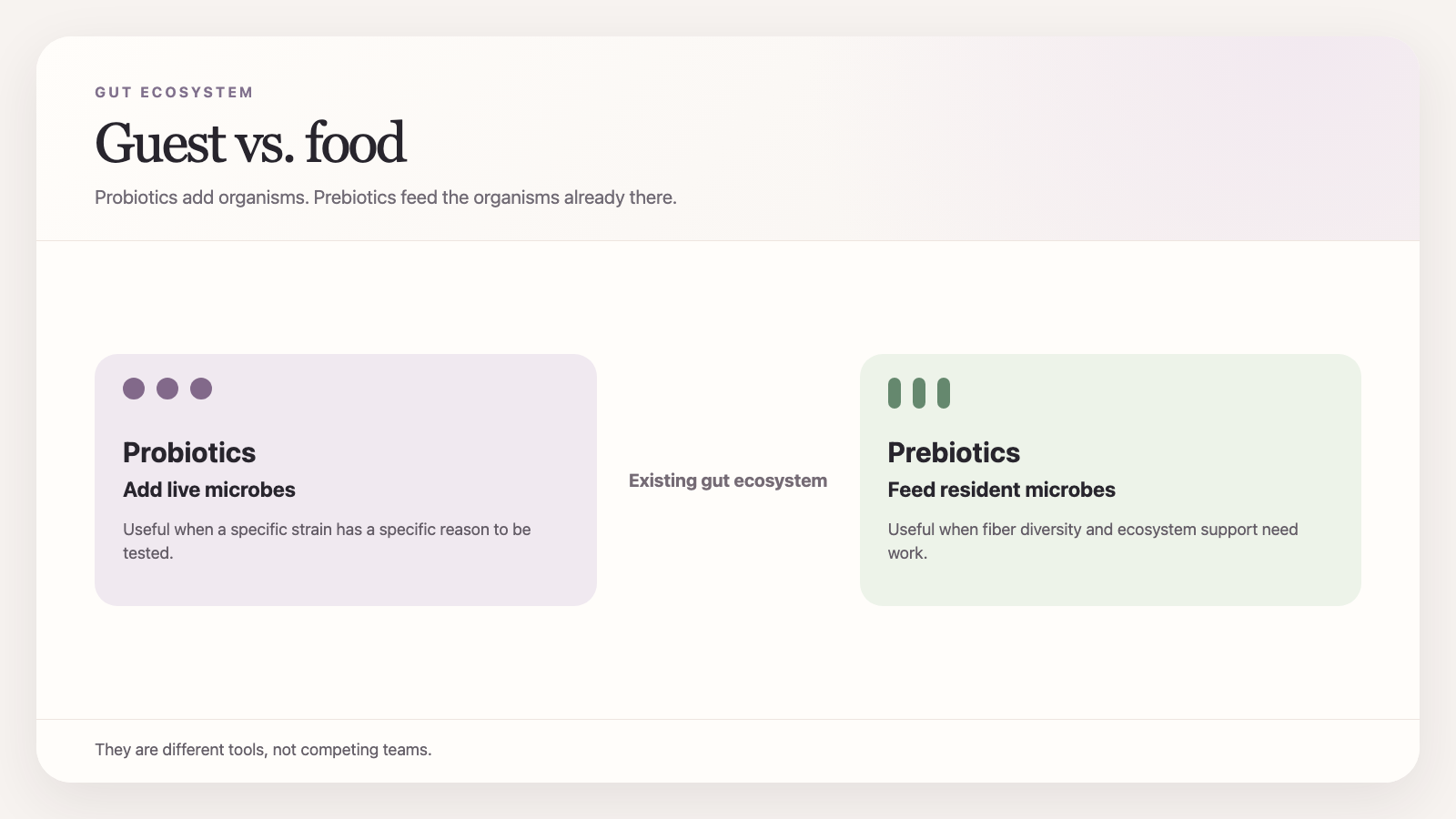 Guests and food may work in the same ecosystem, but they are not the same intervention.
This is why many people eventually land on the answer they hate hearing: gut health often improves more from a better dietary pattern than from an expensive probiotic habit alone.
When a probiotic makes more sense
A probiotic experiment makes more sense when you have a specific reason to test a specific strain or product category.
That may include situations like:
- after antibiotics
- certain digestive complaints where strain-specific evidence exists
- clinician-guided use for defined conditions
What does not make sense is treating every vague bloating complaint as a sign you need a random broad-spectrum probiotic.
When a prebiotic-first approach makes more sense
Prebiotics deserve first billing more often than they get.
If the bigger picture is:
- low fiber intake
- low dietary diversity
- meals built around convenience rather than microbiome support
then the more useful question is not which probiotic to add. It is whether your current diet gives beneficial microbes anything worth living on.
That usually means working on:
- fiber diversity
- more plants overall
- more consistent intake of fermentable foods or fibers you tolerate well
The caveat: more prebiotic is not always better immediately
This is where "gut health" content becomes accidentally cruel.
If someone is already bloated, reactive, constipated, or dealing with IBS-type symptoms, suddenly throwing a large dose of fermentable fiber into the mix can feel awful. That does not prove prebiotics are bad. It means the system may need a slower ramp or a more tailored approach.
The same thing is true for fermented foods and high-fiber interventions. Good idea, bad dosage is still a bad experience.
What the evidence landscape looks like
The clinical and mechanistic review literature on probiotics and prebiotics is clear on one important point: both categories can matter, but effects depend heavily on context, product type, and outcome being measured.
The Nature Reviews Gastroenterology & Hepatology review on probiotics and prebiotics makes this distinction well. It does not collapse the categories into one generic gut-goodness blob. It treats them as different interventions with different strengths and limitations.
That is the right frame.
The smartest order of operations
If you are trying to improve gut health without spiraling into supplement chaos:
- Look at the diet pattern first.
- Improve fiber diversity and tolerance thoughtfully.
- Then decide whether a probiotic experiment has a specific rationale.
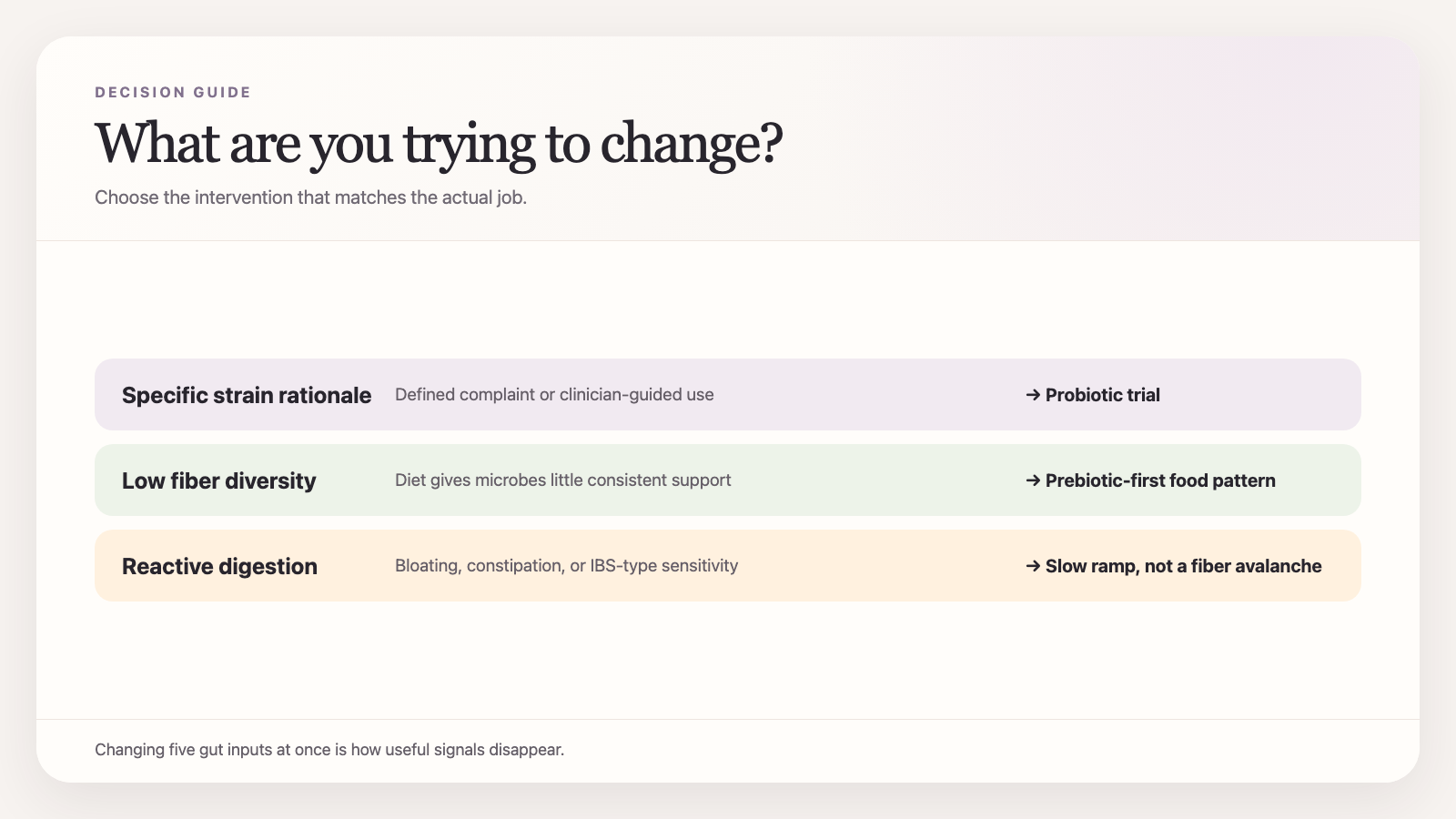 Choose the tool for the job, and slow down when digestion is already reactive.
That order annoys people because it is less exciting than ordering a capsule.
It is still usually the better strategy.
What to track
Track:
- bloating
- bowel regularity
- stool consistency
- meal pattern changes
- supplement start dates
That is enough to tell whether you are helping the system or just creating more noise.
Ovelia is helpful here because gut interventions often fail for a simple reason: people change too many things at once and then try to remember which week their digestion felt better.
The bottom line
Probiotics and prebiotics are not interchangeable.
If you want the short version:
- use probiotics when there is a specific reason to test a specific strain or product
- use prebiotics and broader fiber work when the ecosystem itself needs better support
The best gut-health decision is usually less about buying a buzzword and more about understanding which lever you are actually trying to pull.
That is slower. It is also much smarter.
Sources:
Ready to track what actually works for you?
Ovelia turns what you read into a guided protocol you can actually follow.